2020-2021 UPDATE
2020-2021 UPDATE
With the Covid-19 issue changing social norms your Prescott Audubon Society Chapter has itself in the anti-social mode which is diametrically opposed to our establish social openness! That doesn’t mean we have been inactive in supporting our National Audubon and local conservation, environment and wildlife missions.
INDEX OF ARTICLES
Click on Title to go directly to the Article
1. INTRODUCTION
2. KESTREL NEST BOX
3. KESTREL RELEASE
4. UPPER VERDE IBA & CUCKOO SURVEYS
5. 2020 WATSON WOODS RIPARIAN PRESERVE IBA REPORT
6. PRESCOTT BALD EAGLE SURVEY
7. NIGHTJAR SURVEY OPPORTUNITY
8. CLOSING STATEMENT
9. PHOTO CREDITS
INTRODUCTION
As we prepare for a new season of surveys and nest box monitoring, this issue reports the results of last year’s efforts. You will find articles by Dave Frechette, who coordinates the American Kestrel and Wood Duck nest box program and our surveys on the Upper Verde River, and by Karen O’Neil, coordinator of the Watson Woods Riparian Area Important Bird Area (IBA) surveys. There is a short summary of the January 2021 Bald Eagle survey and an invitation to participate in Nightjar (nighthawks & poorwills) surveys conducted by Arizona Game & Fish Department.
New First- of-Season sightings are appearing daily, with the return of the Turkey Vultures and other summer residents, along with a jewel-box of migrating warblers. Be inspired by these tales of our surveys and then grab your binoculars and join us, or visit your own favorite haunts!
2020 PAS KESTREL NEST BOXES
By Dave Frechette
For several years now Prescott Audubon has provided and monitored nest boxes for use by Wood Ducks and American Kestrels. Although numbers of kestrels seen in the area seemed lower this year than in some previous years, the Arizona Game and Fish Department (AGFD) banded a record fourteen nestlings from three boxes at private residences in Chino Valley and Paulden. Wood Ducks nested in two boxes in Prescott and produced eight ducklings. The Wood Duck nestlings, which leave the nest within 24 hours of hatching, are not banded.
In 2017 PAS joined an effort by the American Kestrel Partnership (AKP), a project of The Peregrine Fund, to provide nest boxes for use by American Kestrels. The partnership hopes to establish whether factors related to breeding have contributed to the decline in kestrel populations across the country over the last few decades. PAS currently has seventeen nest boxes between Prescott and Paulden which are intended for use by kestrels, although the kestrels have been known to use some of the six boxes designed for Wood Ducks as well. Early in the breeding season, volunteer observers and nest box hosts check for kestrel activity around the boxes. Later in the season we check for eggs and then for nestlings. Determining the age of the nestlings is important because we want to band them before they leave the nest.
Early in the 2020 nesting season, two boxes at private residences in Chino Valley and one in Watson Woods attracted interest by pairs of kestrels. Then all of those birds vanished and the boxes were not used. We don’t know if something happened to the kestrels or if they changed their minds about the suitability of the boxes or about something else.
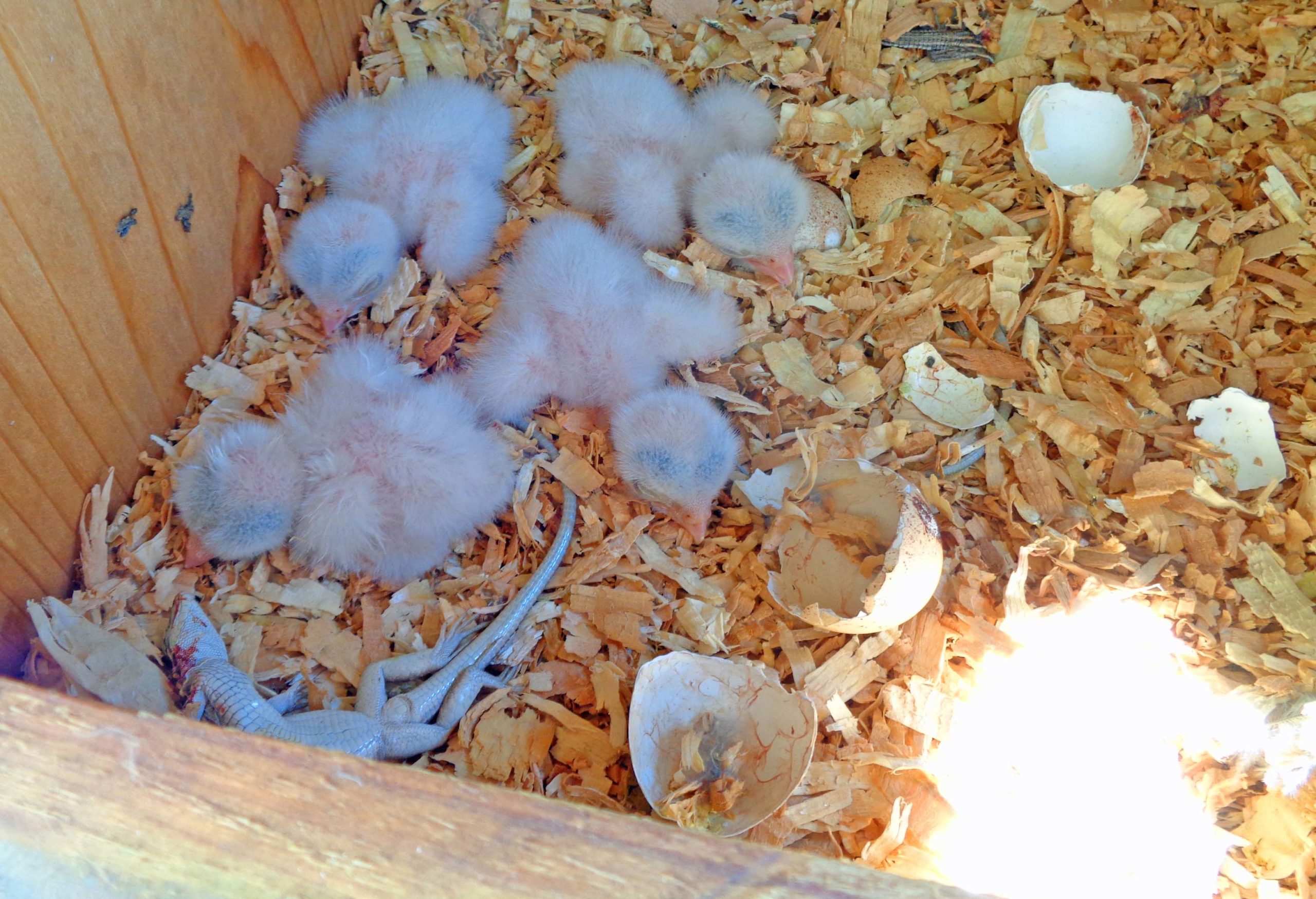
Kestrels did raise families in three boxes in Chino Valley and Paulden. One box in Chino Valley was installed just before the 2020 nesting season and the second has had a successful nest each year since our participation in the program began. This was the first year of use at the box in Paulden which has been in place for three years. Each of the three boxes initially had five eggs. Subsequent inspections revealed four nestlings in one box and five in each of the other two.
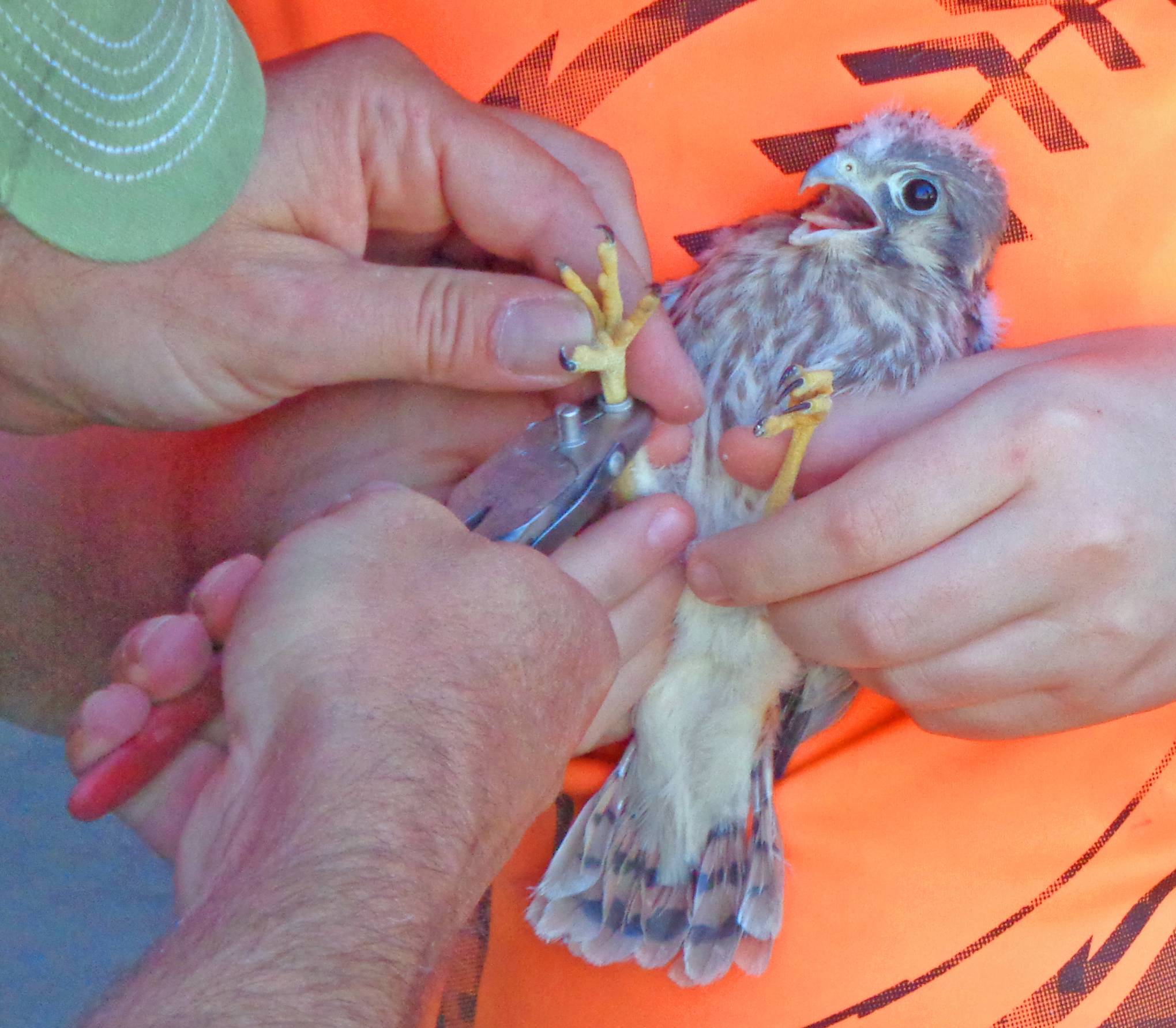
Tuk Jacobson is the Raptor Management Coordinator for the Arizona Game and Fish Department (AGFD) and manager of the AKP nest box program in Arizona. Each season he bands our kestrel nestlings and records data on their weight, approximate age, and general health. In addition to the traditional aluminum band on the bird’s right leg, he affixes a larger blue metal band to the left leg. If a banded bird cooperates, the larger letter/number characters can be read with binoculars or a spotting scope. If you see a kestrel with a blue or black band on the left leg, please report the date and location of the sighting and, if possible, the ID number to Dave Frechette at ten.asunull@lertsek-74xelec or 928-713-9074.
The first banding session, of the four nestlings in Chino Valley, occurred on May 29, the earliest banding date so far in our program. On June 5, it was the turn of the five in Paulden. One particularly feisty nestling attempted, unsuccessfully, to escape while being weighed. Banding of the five nestlings at the last box was on June 15.
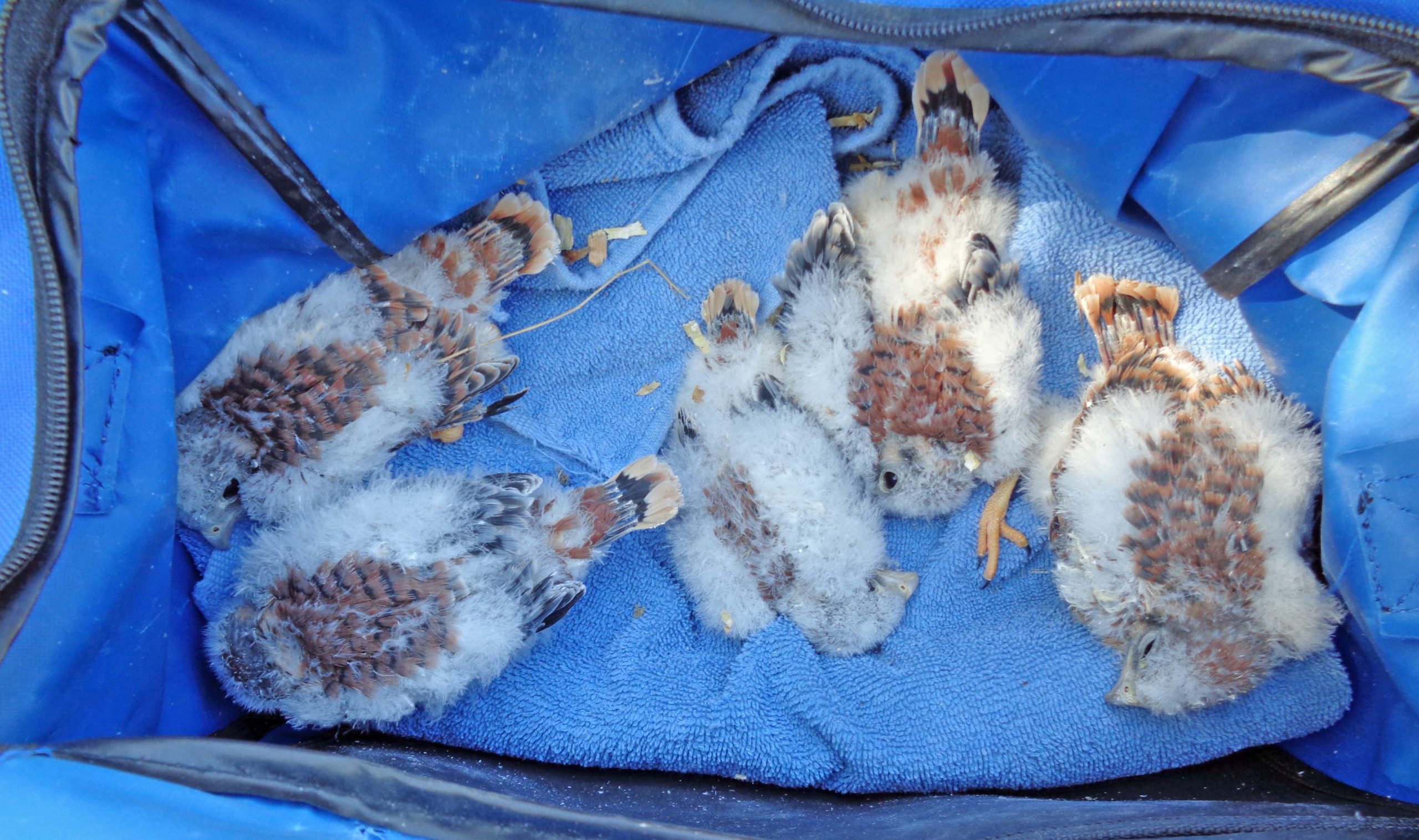
After the second and the third banding sessions, we stopped in to check on the family from the box which had been banded first on May 29. By June 5 all the nestlings had fledged. Several times both adults flew into a deciduous tree where, presumably, the new fledglings were safely perched. On June 15, all four fledglings perched in view in a snag. At one point the adult female brought food to one of the perched fledglings.
After the last banding session, Tuk asked if PAS might be willing to participate in releasing rehabilitated kestrels near our boxes which had not been used for nesting. This idea was approved by the PAS Board of Directors and two hack boxes were installed. The release program is described below in this newsletter.
PAS began providing nest boxes for Wood Ducks in 2016 to augment naturally-occurring nest cavities in the Prescott area, one of the few places in the state where this species is known to nest. This is the second year that Wood Ducks have used nest boxes, including one intended for use by American Kestrels. The boxes and the access holes are the same size, but Wood Duck boxes have a horizontal opening and kestrel boxes a vertical opening. The birds, however, don’t care about a box’s intended use and both box designs have been used by both species. The best evidence for use of a box by Wood Ducks is a nest of broken eggshells after the nestlings have fledged. This year one box had eight hatched and three unhatched eggs and the second had eight unhatched eggs.
Thank you to all the nest box hosts and volunteer observers for their dedication to this project. Thank you to Tuk Jacobson and AGFD for managing the kestrel nest box program and for banding our nestlings.
KESTREL RELEASE
By Dave Frechette
In 2020 the PAS nest box program described above expanded in a new direction. Tuk Jacobson, the Raptor Management Coordinator for the Arizona Game and Fish Department (AGFD) and manager of the nest box program in Arizona, proposed the idea of releasing rehabilitated kestrels near our unused nest boxes. He wondered if allowing the birds a few days to become familiar with a new environment, while protected in a wire-mesh enclosure, might result in their use of the nest box in the spring. AGFD approved the idea, the PAS Board of Directors approved funding, and soon two hack boxes were installed and ready for occupancy.
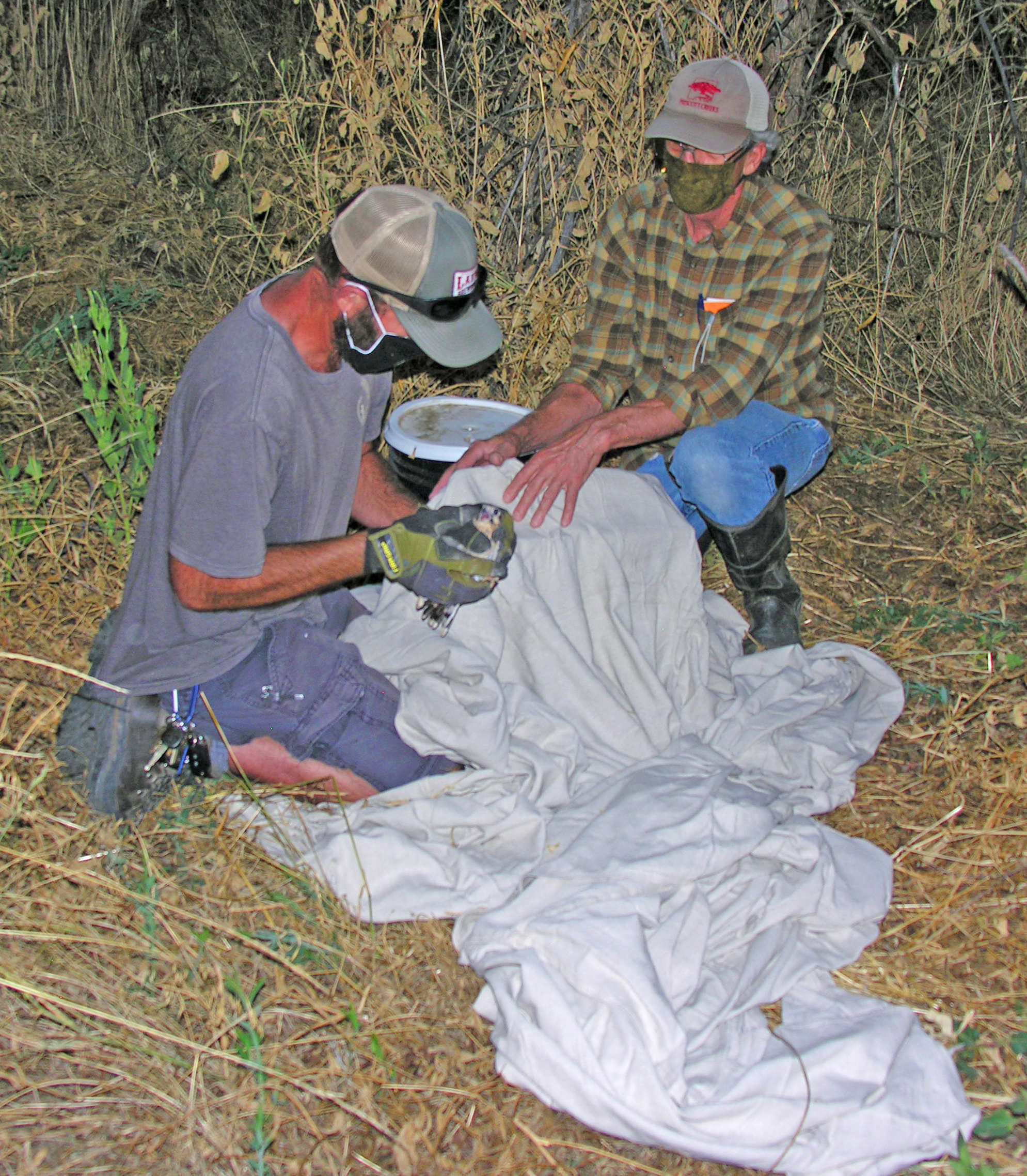
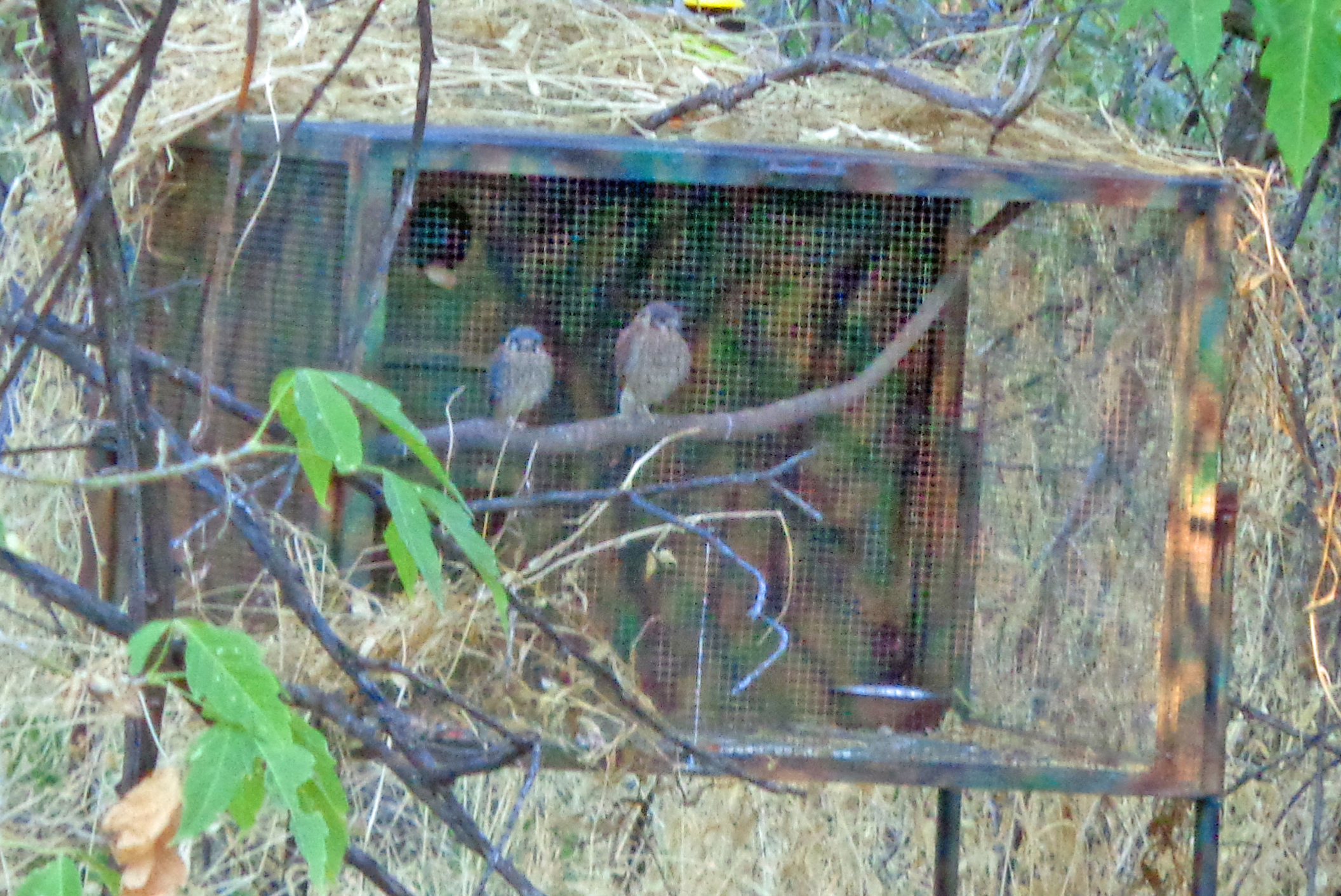
A few days later Tuk delivered an unrelated male/female kestrel pair to each hack box (photo #1). All four birds had been found out of their nests before they could fly well enough to survive and were cared for at a wildlife rehabilitation center in Phoenix. Each bird has a large black band on its left leg in addition to a small aluminum band on its right leg.
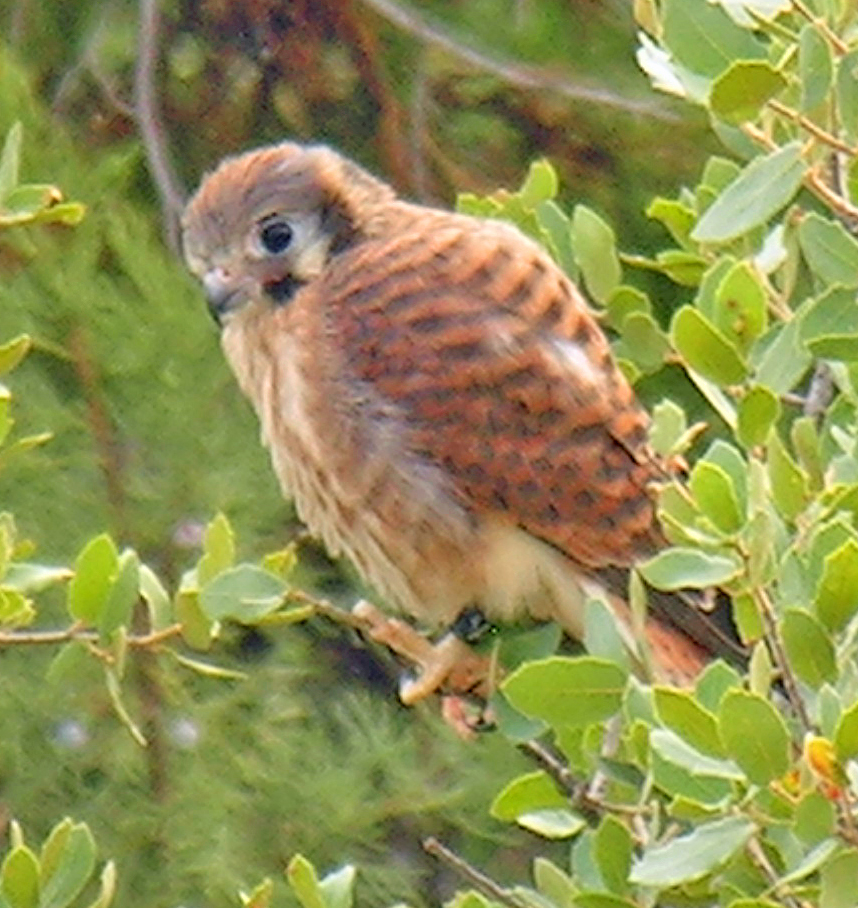
For ten days, volunteers provided food and water for the kestrels and observed their behavior (photo #2). Meal offerings included dead mice, dead quail pieces, and live grasshoppers. Any grasshoppers which died before being consumed were ignored. We also learned that the kestrels preferred quail to be served in pieces small enough to be carried around in their talons. Game camera photos at one of the boxes revealed a couple of surprises. A human visitor was thoughtful enough to keep a respectful distance from the box. A visiting Cooper’s Hawk was not as respectful and attempted, without success, to get to the kestrels. The volunteer monitoring the second box reported seeing a hawk perched on the roof early one morning.
On the day of the releases, we fed the kestrels early so they would have energy for their first flights. We also left mice in the box so they would know where food was available if their initial hunting efforts were unsuccessful.
About two hours later we conducted the first release. When the door was opened, the female flew out first after a minute or so, landed in a nearby tree, and looked around (photo #3). A few minutes later she began to preen. When the male left the box, he flew quite a distance to perch on a power line and then flew to an unknown location. Meanwhile the female flew to perch in another nearby tree, staying in the area for about forty-five minutes before flying away.
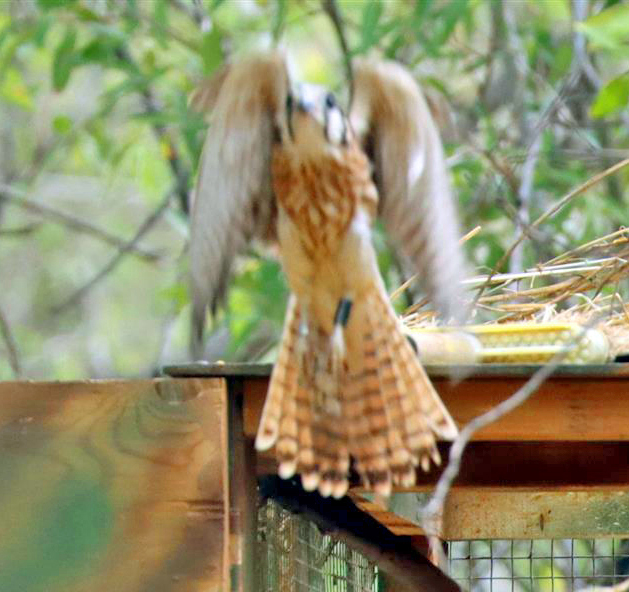
At the second location the female was again the first to leave the box (In photo #4, courtesy of M. Byrd, she looks like an angel as she flies free for the very first time). She perched briefly in a nearby tree and then moved a short distance to another perch. The male left the box, flew several hundred feet, perched in a tree, and began calling. About half an hour later, the female flew, a bit awkwardly at times, in his direction. Both flew out of sight over a hill and were not seen again.
Although the release plan called for providing food, if needed, for another ten days, the supplemental feeding ended and the boxes were removed after a couple of days. Food left in the boxes had remained untouched and the game cameras showed no kestrel activity after the releases.
Since the releases, there have been no reported sightings of any of these banded kestrels. Maybe they were deterred from returning to the boxes by the presence of predator hawks and owls. Possibly they were able to find sufficient food on their own. Perhaps they migrated south for the winter. If you see a banded kestrel, please report the date and location of the sighting and the color of the band on the left leg to Dave Frechette at ten.asunull@lertsek-74xelec or 928-713-9074. If the number on the band is visible, please include that information as well.
Thank you to all the volunteers who helped with this project. Thanks to Prescott Creeks Preservation Association and the City of Prescott Parks and Recreation Department for their parts in making this project possible. Special thanks to Tuk Jacobson and AGFD for creating this program and inviting Prescott Audubon to participate.
UPPER VERDE IBA & CUCKOO SURVEYS
By Dave Frechette
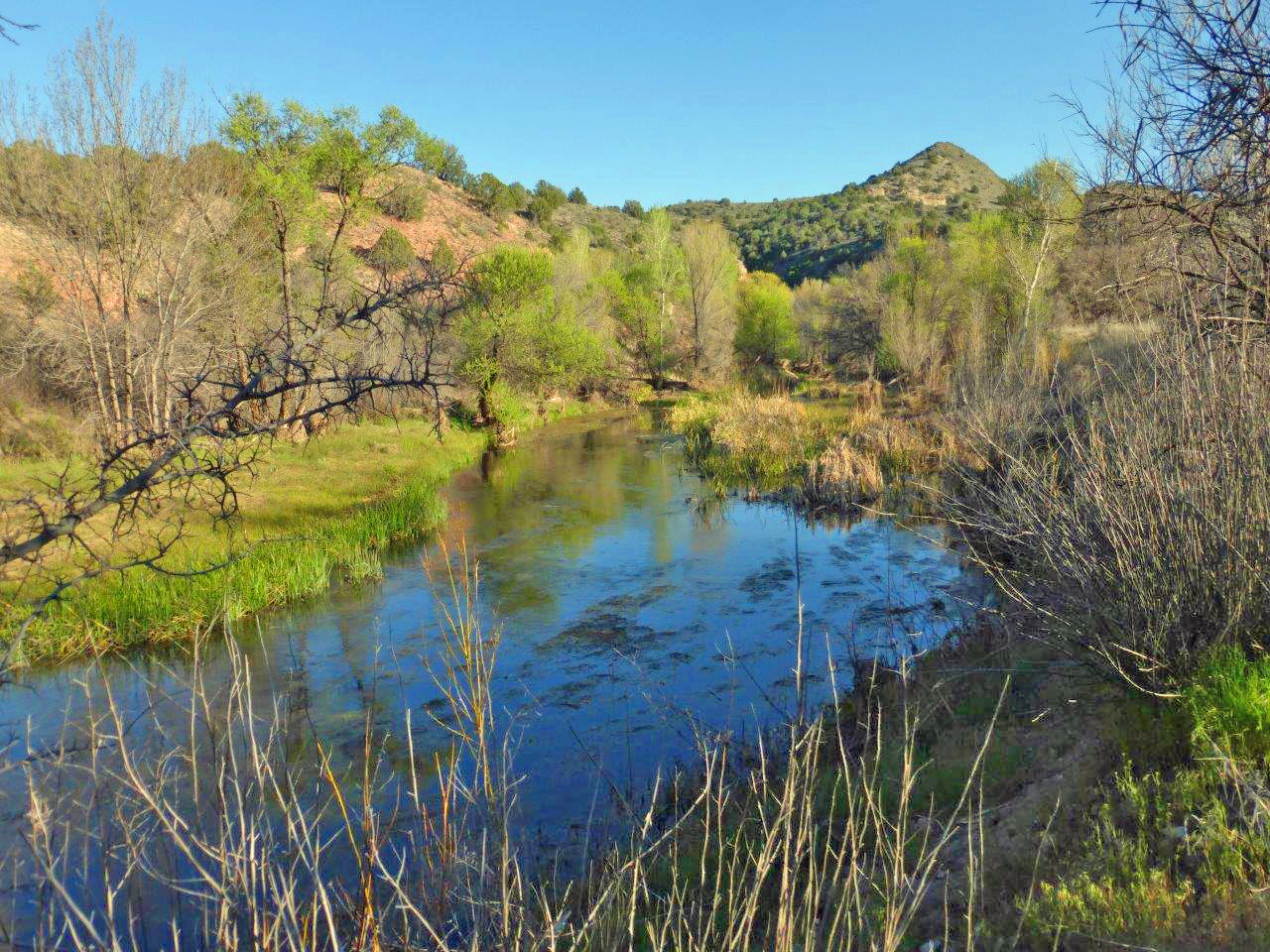
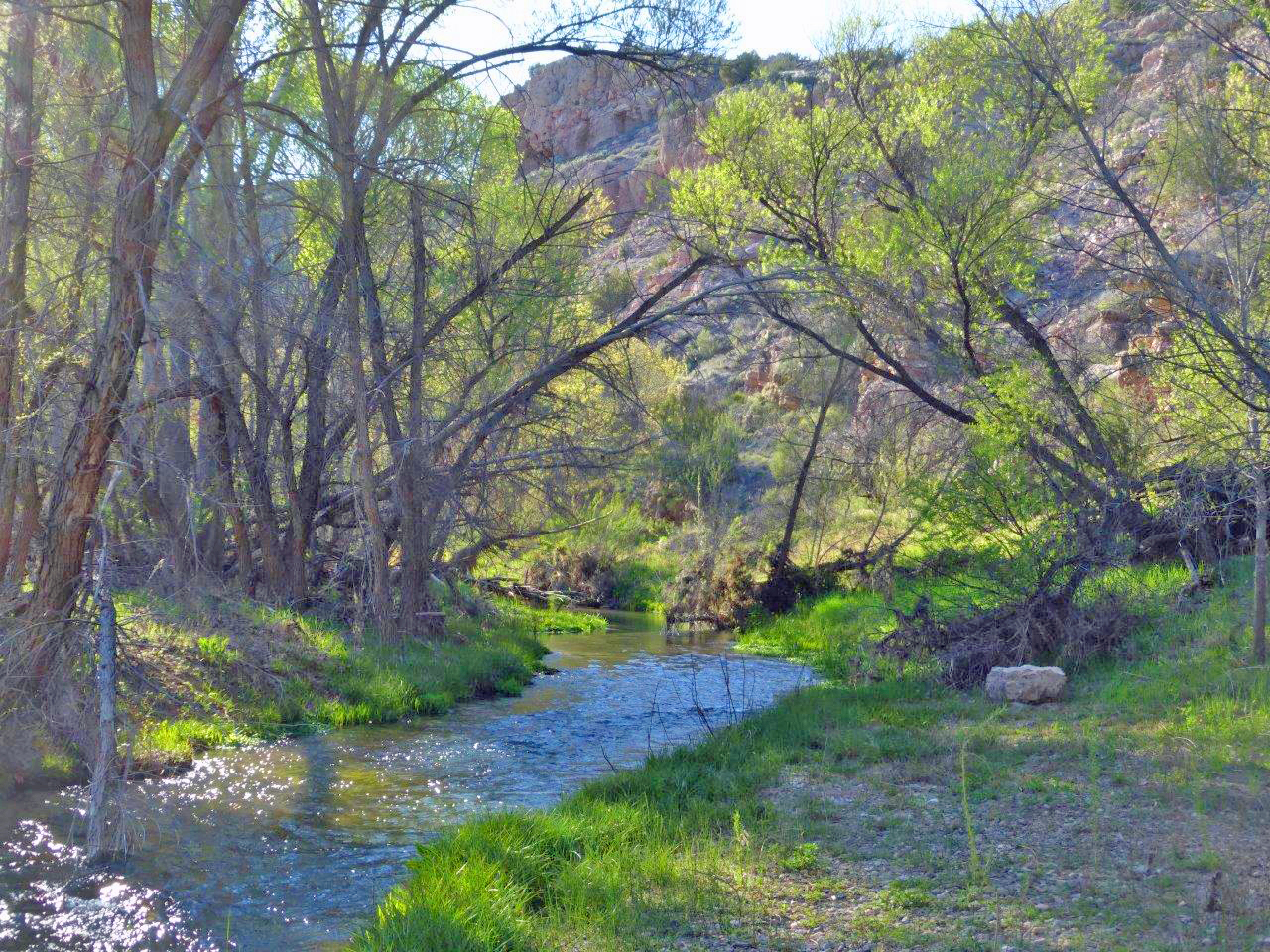
Despite the cancellation of all 2020 PAS field trips and surveys due to the Covid-19 pandemic, a few veteran volunteer surveyors offered to conduct both Important Bird Area (IBA) and Yellow-billed Cuckoo (YBCU) surveys on the Upper Verde River. After careful consideration, we decided to proceed with the surveys on a very limited basis. With the need for social distancing, teams were limited to two people and carpooling was restricted. Very hardy volunteer surveyors without four-wheel drive vehicles hiked down to two of the transects. The venue for our traditional post-survey lunch was, except once, not available, so we brought our own lunches and chairs for picnics.
This year we experimented with starting the surveys thirty minutes earlier than in previous years. For all surveys, we had the opportunity to observe more early-morning bird activity. YBCU survey teams on longer transects had more time to complete the entire transect before 11:00, when the protocol requires the survey to end. In the summer, surveyors had a better chance of returning to their vehicles before the heat became too intense. The earlier start time was deemed a worthwhile sacrifice and will be adopted for future surveys.
The April IBA survey showed a few migrants and small numbers of summer warblers and tanagers joining the wintering sparrows, Marsh Wrens, and Yellow-rumped Warblers. One team was quite surprised to encounter an Eastern Phoebe. Just two weeks later Yellow Warblers, Common Yellowthroats, and Yellow-breasted Chats had taken over and most of the winter residents had headed north. Among the May migrants were a variety of warblers, MacGillivray’s and a Black-and-White among others; Warbling and Cassin’s Vireo; Lazuli and Indigo Bunting; a Swainson’s Hawk; and a lone Cedar Waxwing. We discovered active nests for several species, including Bell’s Vireo on Campbell North, Common Black Hawk, Zone-tailed Hawk, and Great-horned Owl. An all-white downy Golden Eagle nestling was observed in a location on Campbell South which was not known (at least not known to us) to have been used in the past. We enjoyed following the progress of all the nests during the season. Details of the new eagle nest location and subsequent successful fledging of one eaglet were shared with the Arizona Game and Fish Department which had been unable to conduct its usual aerial monitoring activities due to Covid.
During the summer months we conducted five surveys for Yellow-billed Cuckoo, a species which is listed as threatened under the Endangered Species Act. These official surveys were authorized by permits issued to Southwest Audubon by the US Fish and Wildlife Service and the Arizona Game and Fish Department. The surveys were conducted according to the YBCU survey protocol established and approved by the US Fish and Wildlife Service. Cuckoos were detected on each of the surveys.
The fall IBA survey in mid-September was a pleasant end to the survey season. There were noticeably fewer Yellow Warblers and Yellow-breasted Chats, although a fair number of Common Yellowthroats remained, primarily females and likely juveniles. Small numbers of winter sparrows and Yellow-rumps had arrived. Green-tailed Towhee, Warbling Vireo, and a number of warblers, including Nashville, Black-throated Gray, and several MacGillivray’s, were among the migrants.
We encountered a few infrequently-reported permanent residents like Wild Turkey, Crissal Thrasher, Sora and Virginia Rail at various times during the season. Perhaps the rail population is increasing due to the significant expansion of cattail areas along the river.
Non-avian sightings during the surveys included several skunks, mule deer, a river otter, and a swarm of honeybees.
2020 WATSON WOODS RIPARIAN PRESERVE IBA REPORT
By Karen O’Neil
It is safe to say that Covid-19 had an impact on our Important Bird Area surveys in 2020. Namely, we had only two surveys, cancelling the first one originally scheduled for April 26, 2020. While May promised warmer weather, we still had only seven folks volunteer for the May 17th survey, with the provision that social distancing would happen. Masks were optional since we were outdoors.
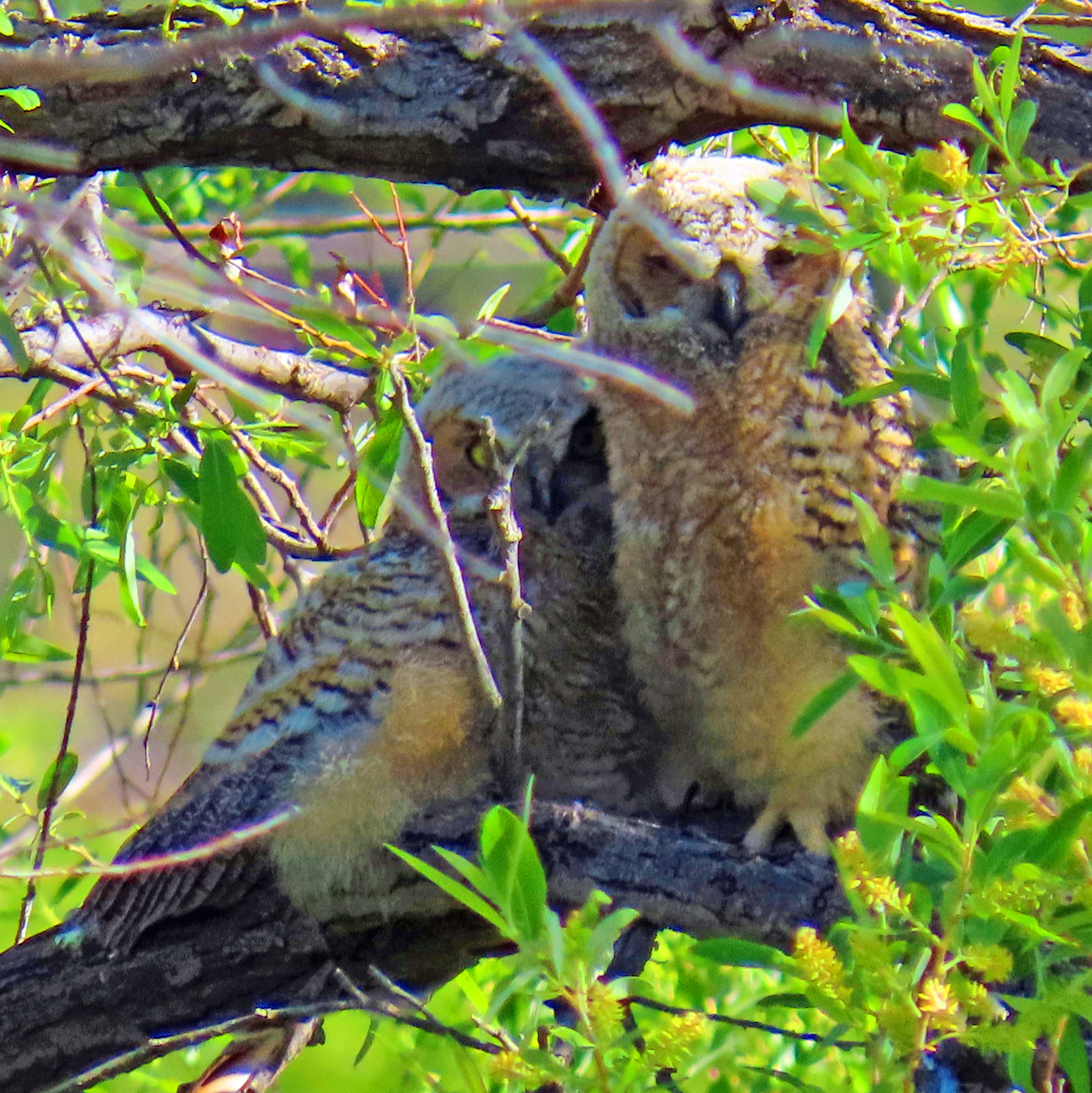
The South transect along Granite Creek was the only transect to produce any shore birds with a couple Killdeer, and also had two recently fledged Great Horned Owls. This was the only transect to have two species of flycatchers, both Black Phoebe and Ash-throated Flycatcher. The two other teams reported only Black Phoebes.
Violet-green Swallows were spread among all the transects, but only the Middle transect (dissected by the Pioneer Parkway bridge) had Cliff Swallows, at least 35 of them. Unfortunately (in my view), Brown-headed Cowbirds were in abundance with a total of 15 found among the three transects. Sadly, no Bullock’s Orioles were observed. This is unusual. The usual warbler species that breed in the Preserve, Lucy’s Warbler, Common Yellowthroat, and Yellow Warbler were observed in varying numbers in each of the transects. Also present on all transects were the usual breeding members of the Cardinalidae family, Summer Tanager and Blue Grosbeak. Additionally there were some lingering transients who typically breed at higher elevations in the Pine/Oak forests. These were also spread among the three transects:
Warbling Vireo, House Wren, Western Bluebird, American Robin, and Black-headed Grosbeaks.
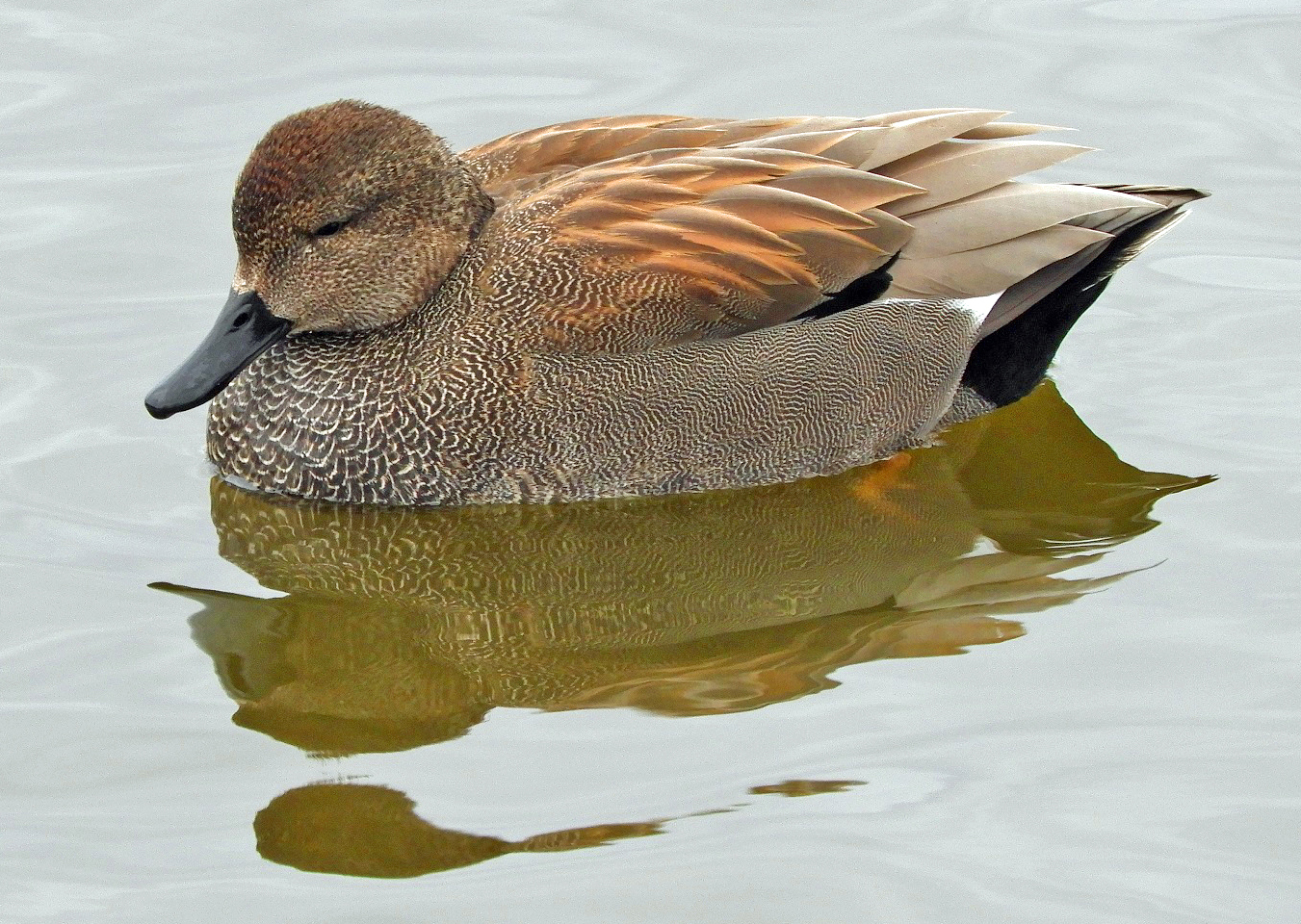
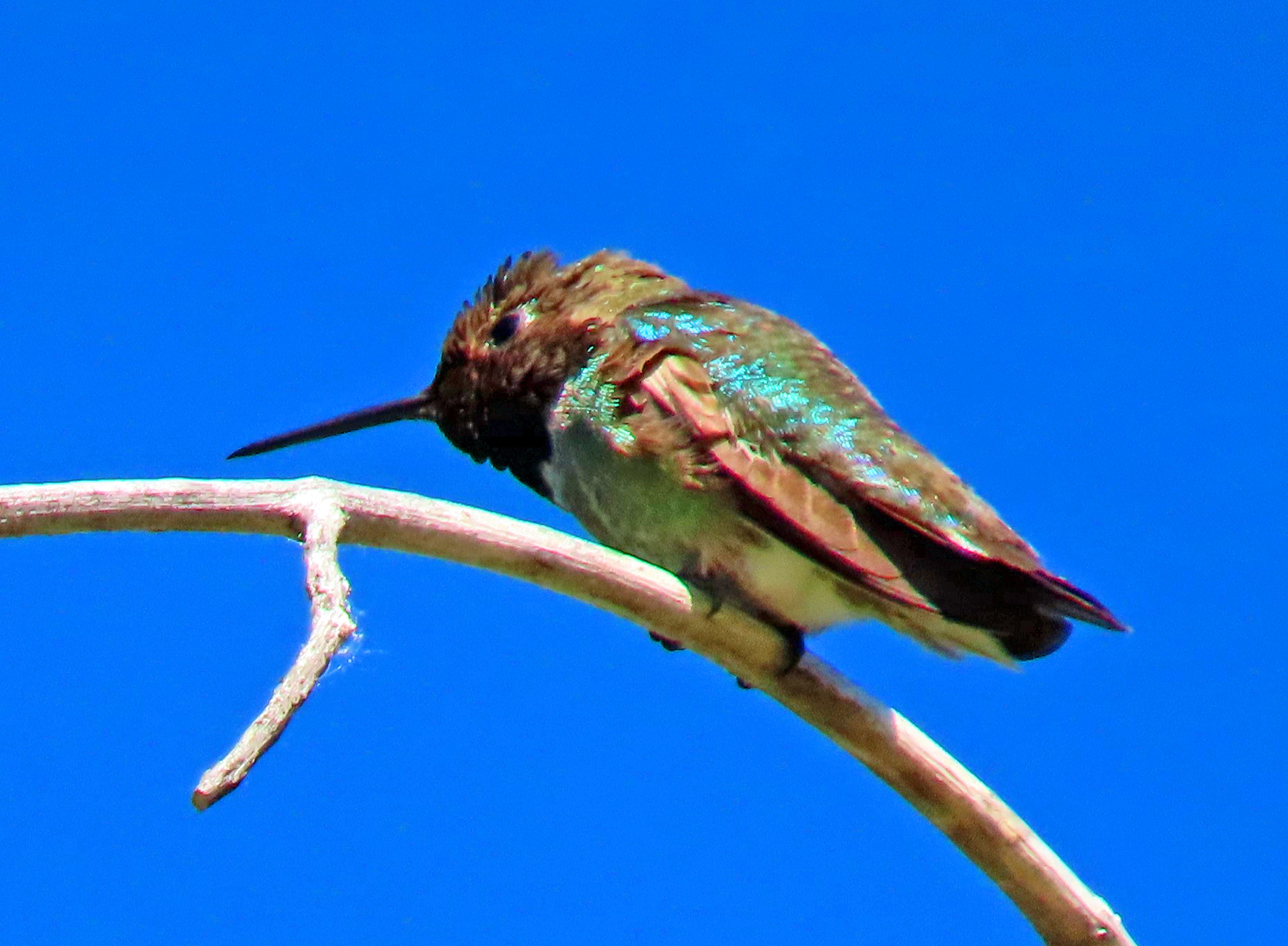
The usual species were also found in typical numbers: Mallards and Gadwalls, Anna’s and Black-chinned Hummingbirds, Ladder-backed and Hairy Woodpeckers, Northern Flicker, Common Ravens, Bridled Titmouse, White-breasted Nuthatches, Bewick’s Wren, House Finch and Lesser Goldfinch, and Spotted Towhees. These are all resident species except the Black-chinned Hummingbirds. Even an Anna’s Hummingbird or two typically over-winter.
There was a good showing of raptors. At the North end of the Preserve was a pair of roosting Great Horned Owl adults, and nearby (where one adult could see it) was a roosting youngster. At the South end of the preserve was a pair of roosting youngsters! Also seen was one Accipiter, a Zone-tailed Hawk, two Common Black Hawks, and a Red-tailed Hawk.
Finally, the winter of 2019-20 was a wet one, and even in mid-May Granite Creek was still flooded especially to the east, part way to the Peavine Trail. As far north as the observers could go, were three pair of Canada Goose, each pair with goslings. Two pair had a total of eight goslings that were good size—about 12-14 inches tall. The third pair had two goslings that were tiny, possibly only a few days old. Out of the blue, apparently, two adults, one from each of the pair with larger goslings got into what looked to us like a battle royale! They grabbed each other’s open beaks and there was furious flapping of the wings. The larger goslings scrambled out of the way, and another adult chased the tiny goslings away. This lasted a couple minutes (it seemed), and shortly after, all three pair of adults with their goslings were floating together in the Creek like nothing had happened! It was a very strange thing to us human observers!
The second and final survey of Watson Woods Riparian Preserve was held on August 30, 2020. Ten volunteers participated in this survey. Of course, this survey is especially on the look-out for migrant species along with the resident species and lingering species that breed in the Preserve and ultimately migrate south.
The North transect found a migrating Cordilleran Flycatcher plus six Black Phoebes. Presumably this number (two in May) represents post-breeding dispersal. While there were still eight Yellow Warblers and one Common Yellow-throat as well as a Summer Tanager and some Blue Grosbeaks, the observers found a Nashville Warbler and two Wilson’s Warblers.
The Middle transect found a Rufous Hummingbird and a whopping eleven Anna’s Hummingbirds. These may represent both some post-breeding dispersal and some migratory individuals from further north or higher elevations. They had the typical two Black Phoebes, and also one Empidonax Flycatcher and a Western Kingbird. They also had a couple Phainopeplas as well as a Chipping Sparrow and a Rufous-Crowned Sparrow. The latter is not common sighting in the Preserve. For some reason, a number of Great-tailed Grackles showed up in this part of the Preserve. They are also quite uncommon in the Preserve as there are no French Fries there! In addition to eight Yellow Warblers, the observers had four Wilson’s Warblers. A Summer Tanager still remained along with Blue Grosbeaks including several
juveniles, and one Western Tanager was present.
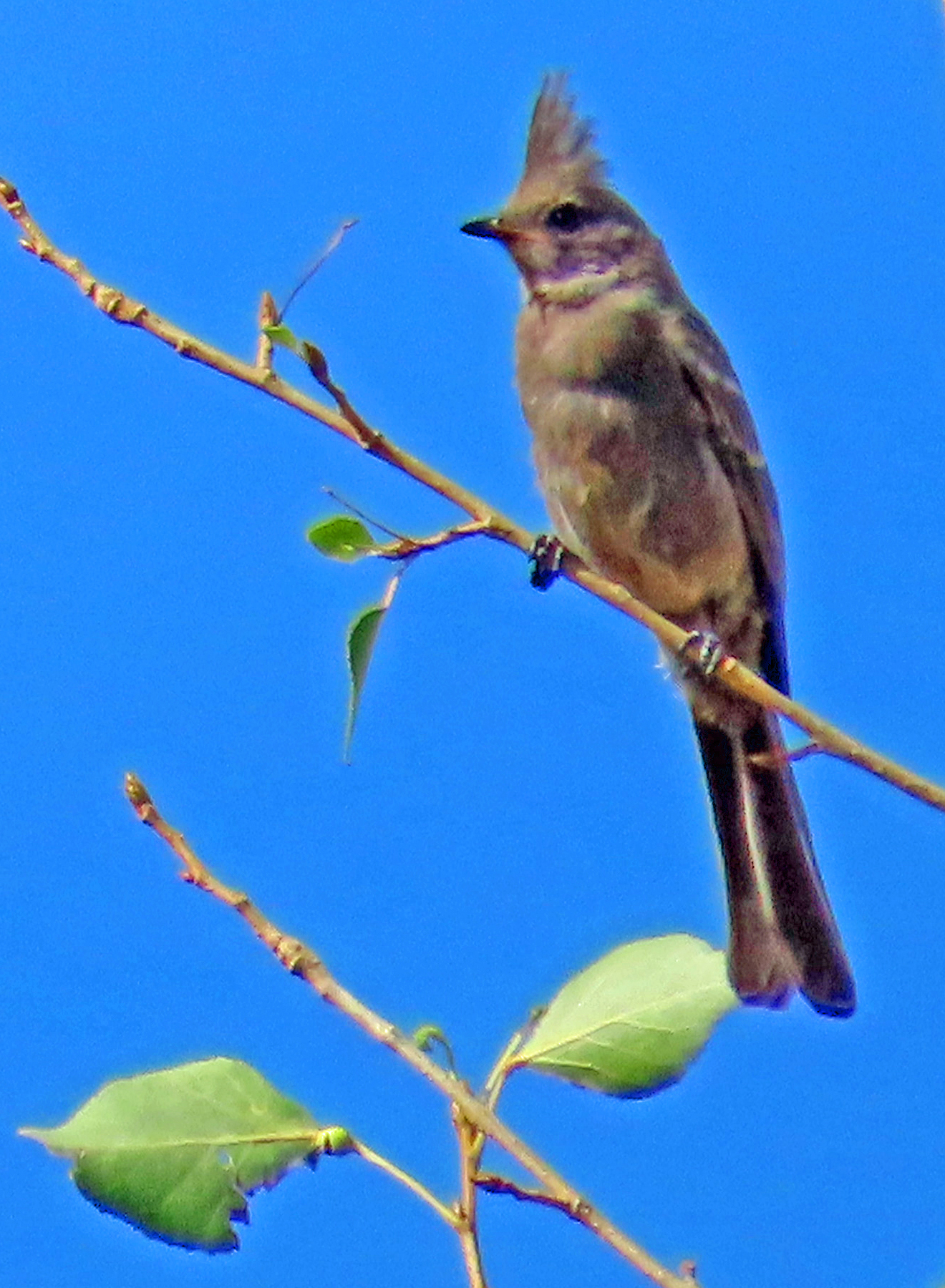
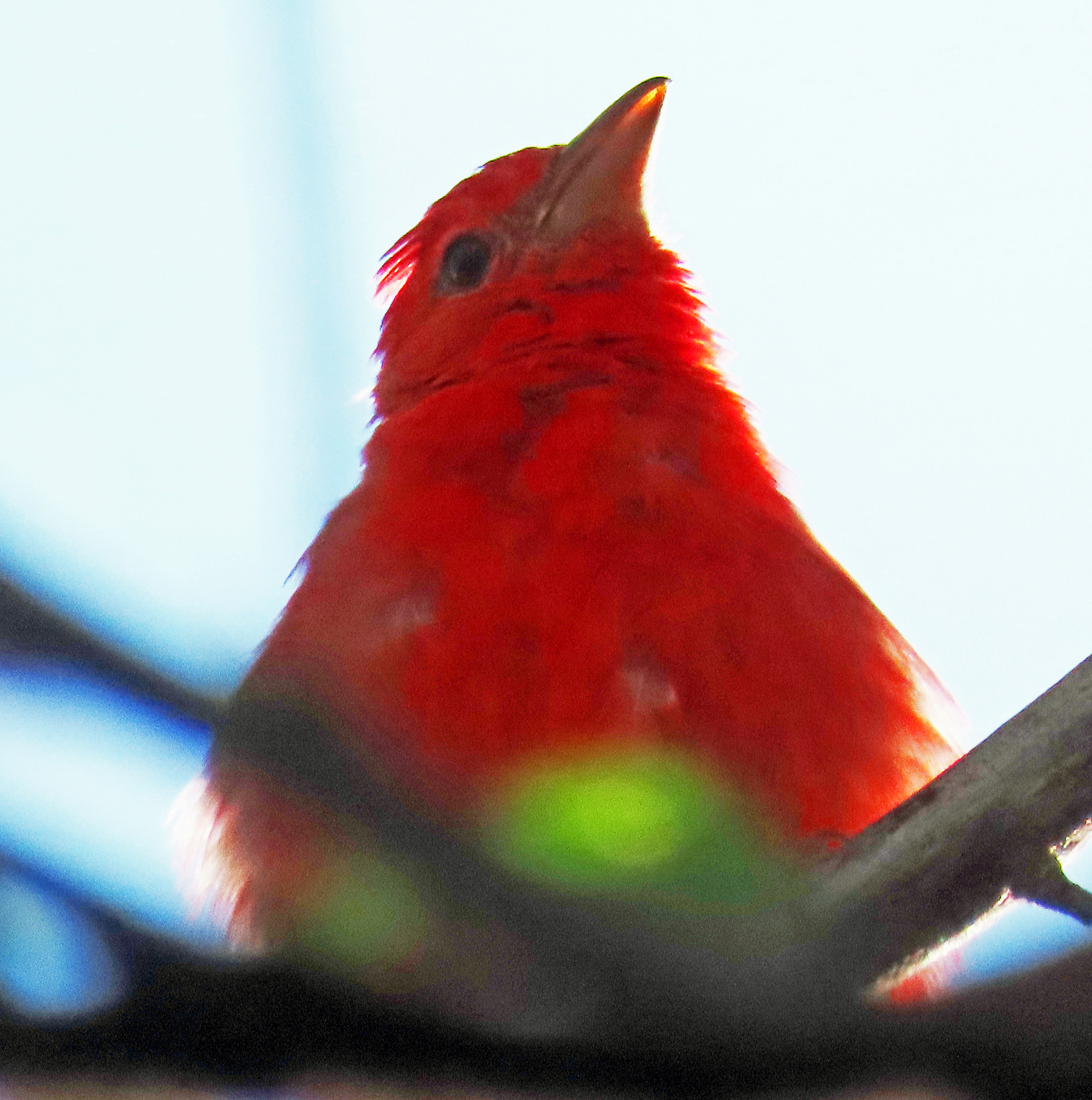
Another species that is actually rarely found in Watson Woods Riparian Preserve is Woodhouse’s Scrub Jay (formerly Western). Interestingly one was present on the Middle transect and on the South transect. The South transect also had a nice assortment of hummingbirds, including Black-chinned, Anna’s and Rufous. There was a flyover of Double-crested Cormorants, and an additional five Phainopeplas. Along with another eight Yellow Warblers, another Summer Tanager, and several Blue Grosbeaks they found a Western Tanager and a Black-headed Grosbeak.
No Common Black Hawks were found which is unusual for late August. My suspicion is that they moved where they could find adequate water for hunting. As you may recall, the summer of 2020, like 2019, was close to monsoonless, and water was scarce. A Great Horned Owl was found on the North transect, two species of falcons on the Middle transect—a Peregrine Falcon and two American Kestrels, and an unidentified Hawk was on the South transect.
Perhaps the most interesting finding of these surveys, actually a non-finding, was the total absence of European Starlings! Not a one was found on any transect on these two surveys of Watson Woods Riparian Preserve.
A big Thank You goes to the volunteers: Sue Drown, Laura Rhoden, Laurel Freeman, Wendy Wonderley, Karen Williams, Mary Trevor, Norma Jenkins, Edie Dillon, and Deb Pastor from Prescott Creeks.
PRESCOTT BALD EAGLE SURVEY
January 8, 2021
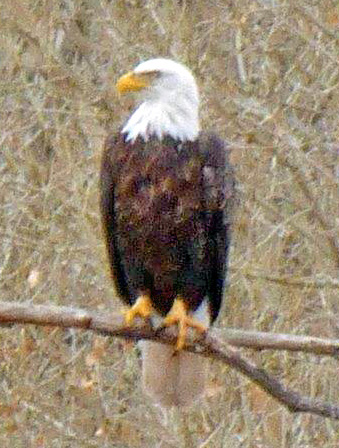
Pre-dawn on a chilly Friday in early January, ten people arrived at their observation posts to conduct Prescott National Forest’s annual Bald Eagle Survey. The survey, which runs from 7:00 AM to 11:00 AM, is held at Willow, Watson, Lynx and Goldwater Lakes. Prescott Audubon volunteers assisted Prescott National Forest personnel and other volunteers in recording the presence and behavior of Bald Eagles and other raptors.
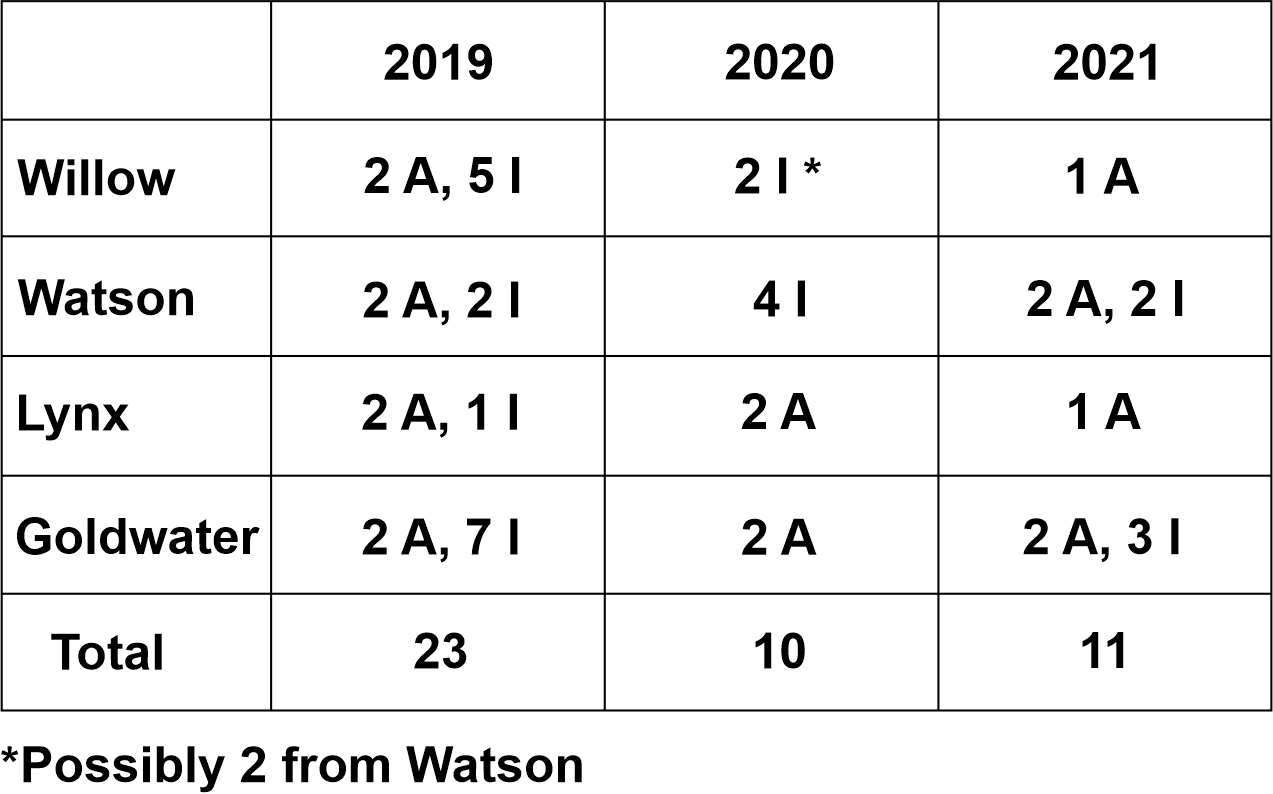
Eleven Bald Eagles were observed this year. Other raptors included Red-tailed Hawks, American Kestrels, and Northern Harriers.
Here are the results from the past three years (A=Adult, I=Immature):
NIGHTJAR SURVEY OPPORTUNITY
The Arizona Game and Fish Department (AGFD) is looking for volunteers to adopt a nightjar survey route for annual surveys of nightjars and nighthawks. For northern Arizona, the 2021 survey is to be conducted during one of the periods May 19-26 or June 17-24, with the latter window preferred. For a general overview of this program, locations of available survey routes, and information about how to adopt a survey route, visit the Nightjar Survey Network at nightjars.org. For specific Arizona survey protocol and data form, contact the Arizona Nightjar Survey Coordinator Edwin Juarez at vog.dfgzanull@zerauje.
AGFD, in connection with the Nightjar Survey Network, is documenting population distribution and trends in nightjar and nighthawk species with the goal of developing strategies for their conservation. Nightjars found in the Prescott area include Common Nighthawk, Common Poorwill, Mexican Whip-poor-will, and occasionally Lesser Nighthawk. Specific information about their habitat use and numbers is limited, but populations of several nightjar species are thought to be dramatically declining across the country.
The Nightjar Survey Network has developed a standardized survey protocol to document habitat use and population trends. Volunteers conduct surveys and submit their observations to the network. The effort is coordinated nationally by the Center for Conservation Biology and state-wide by AGFD.
Each route is surveyed once a year beginning around sunset on a bright moonlit night during a designated window in, for our area, May or June. Surveyors stop every mile along a predetermined nine-mile driving route and, at each point, count the number of nightjars seen or heard during a six-minute period. No artificial broadcast of any species call is used. The survey should take less than two hours to complete.
The data gathered during these surveys over multiple years will help to document population trends and will add to knowledge of habitat use by these poorly-understood species. Please consider adopting a survey route.
CLOSING STATEMENT
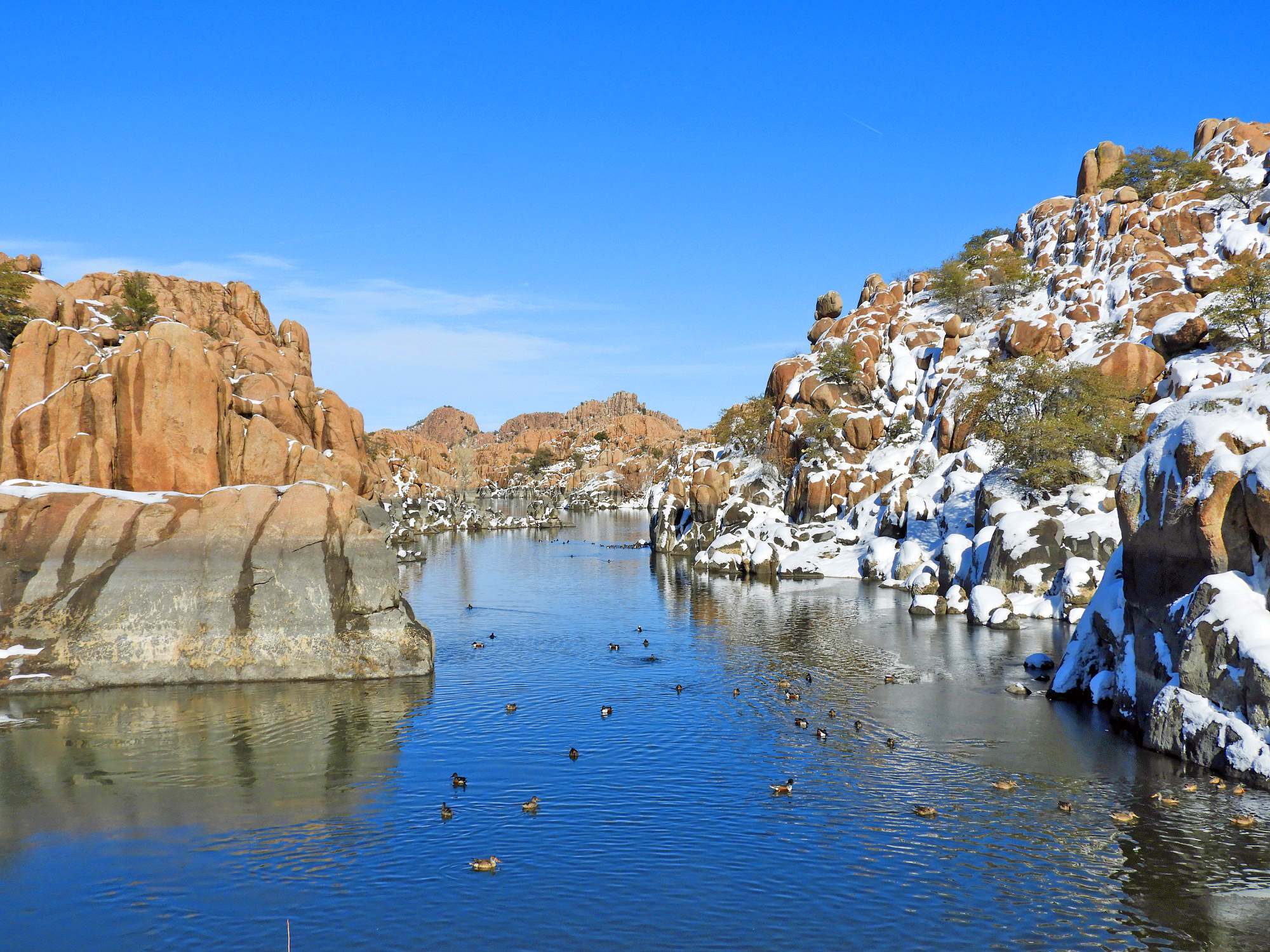
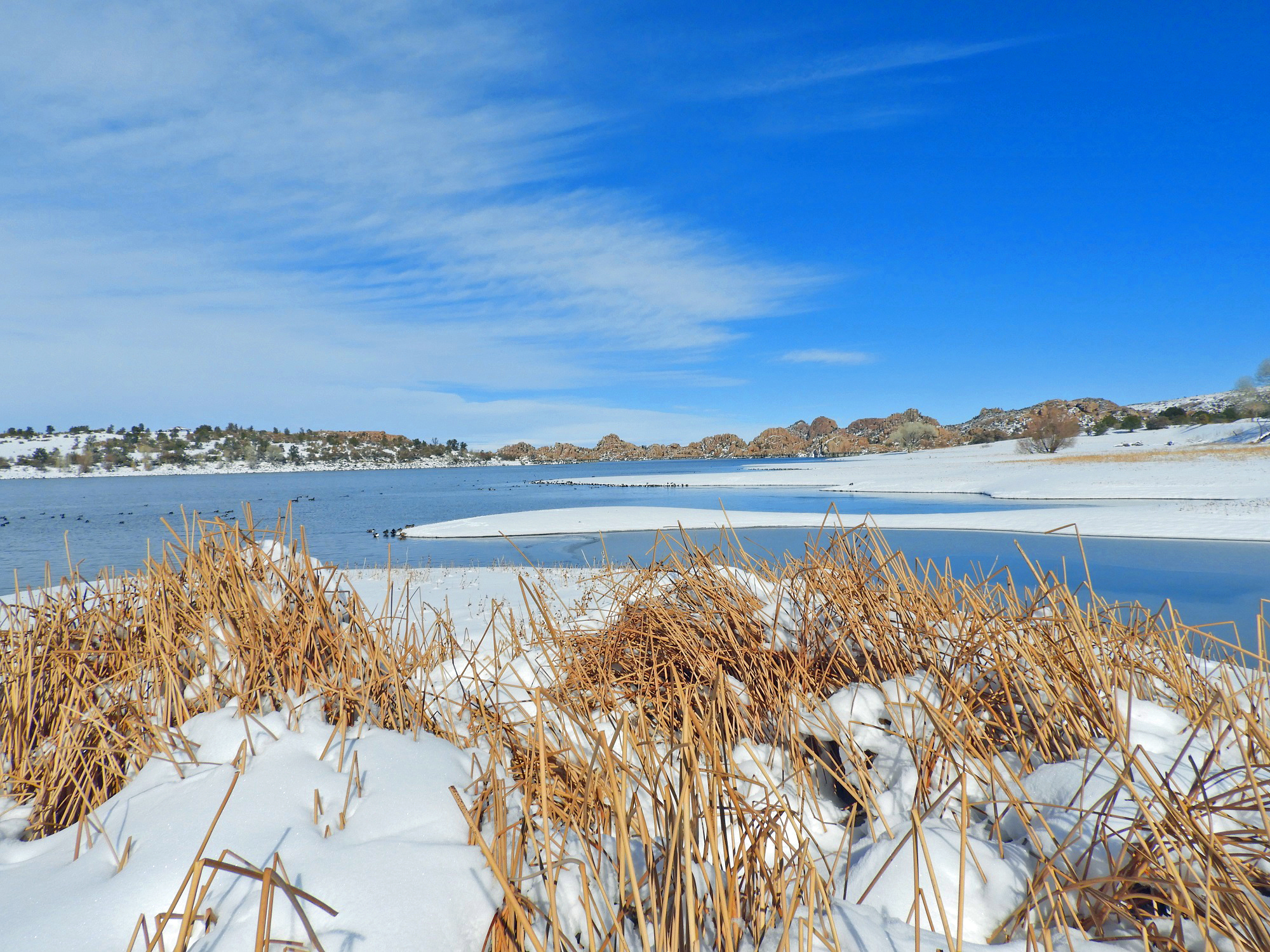
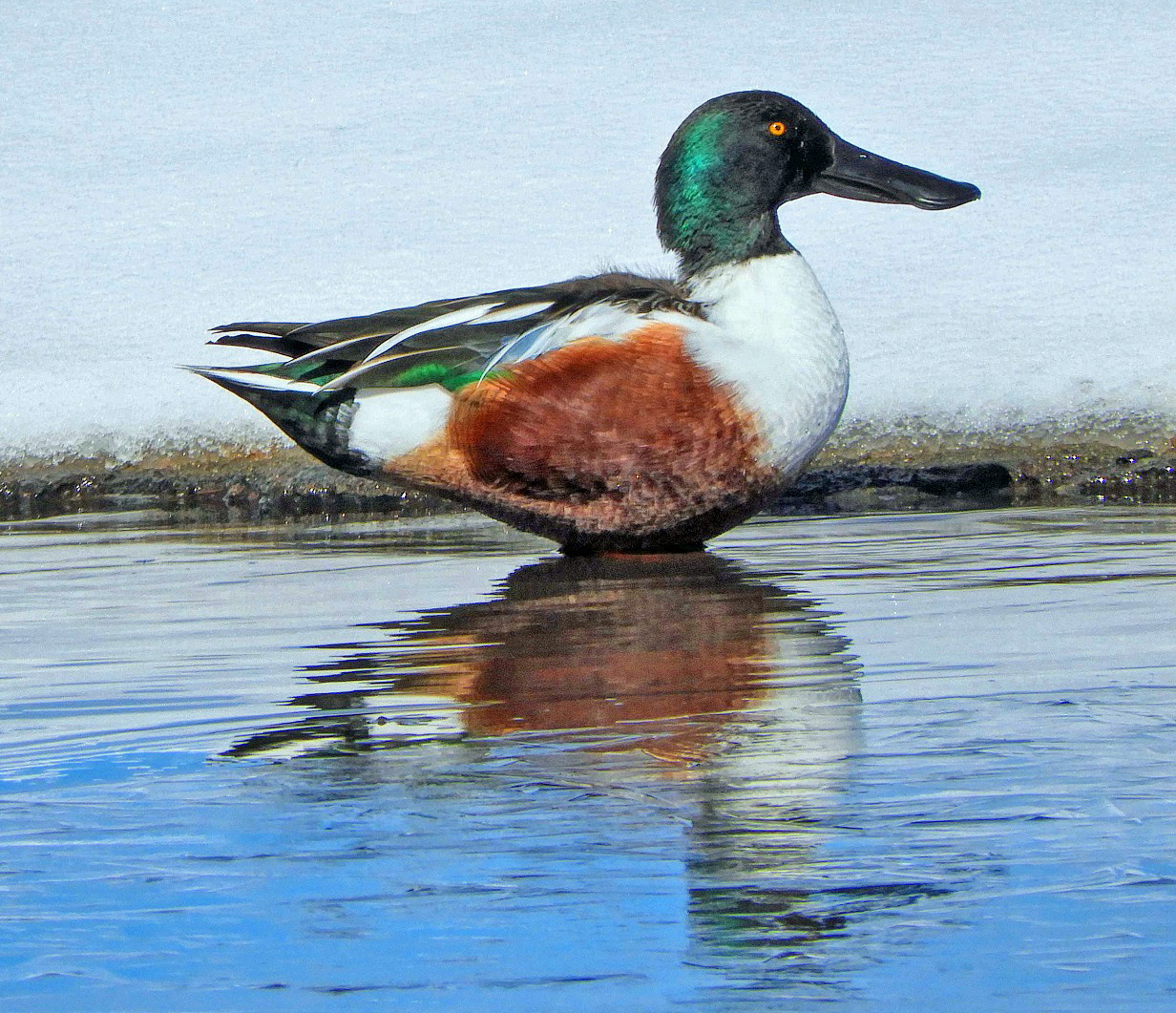
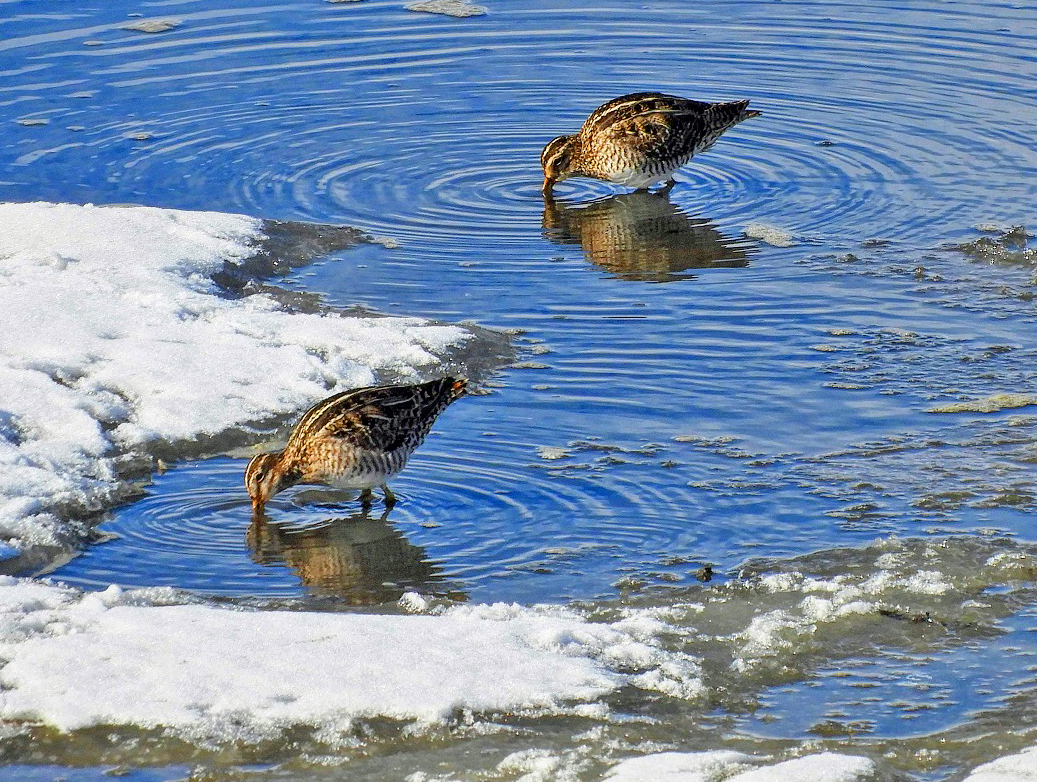
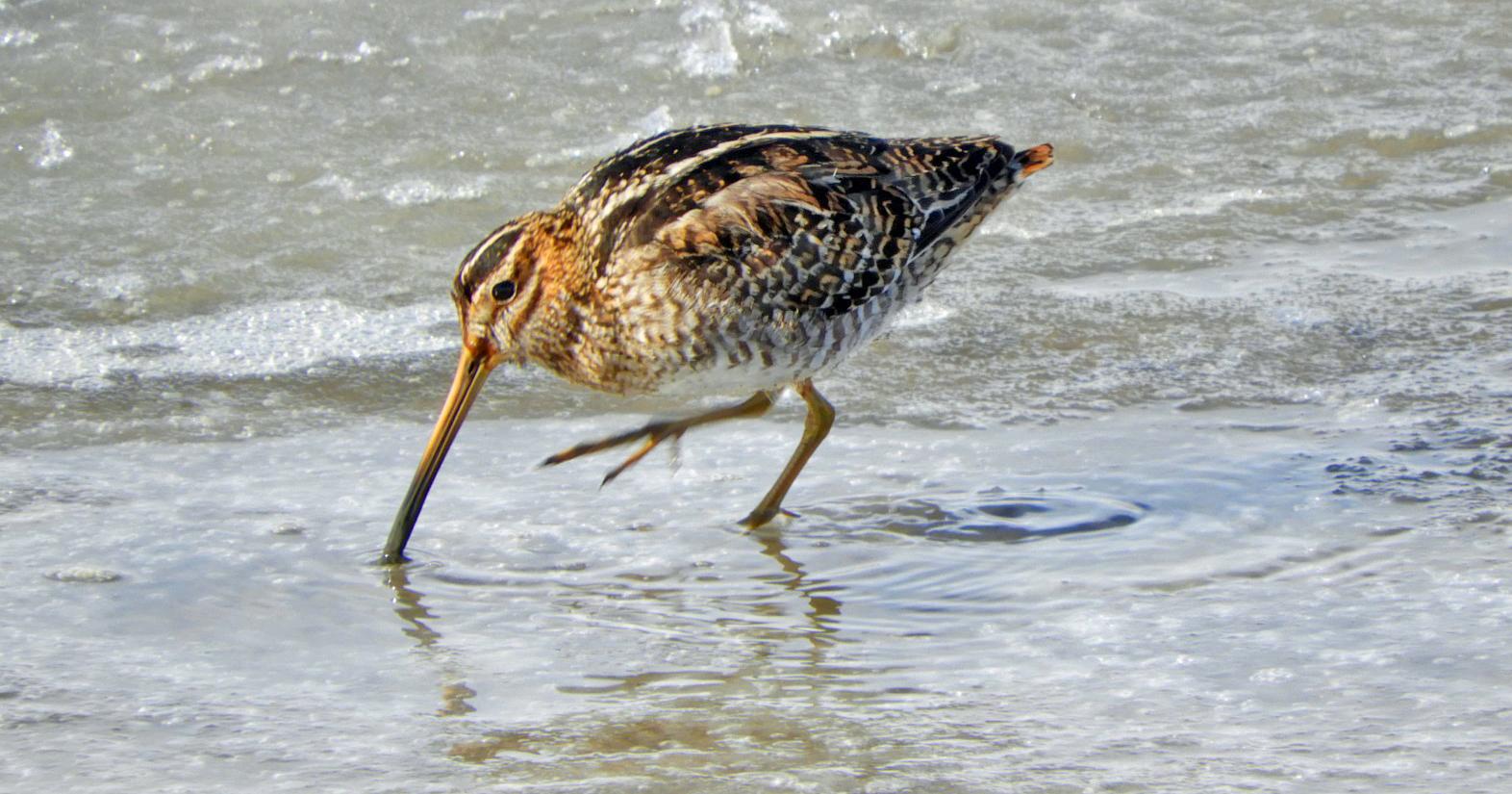
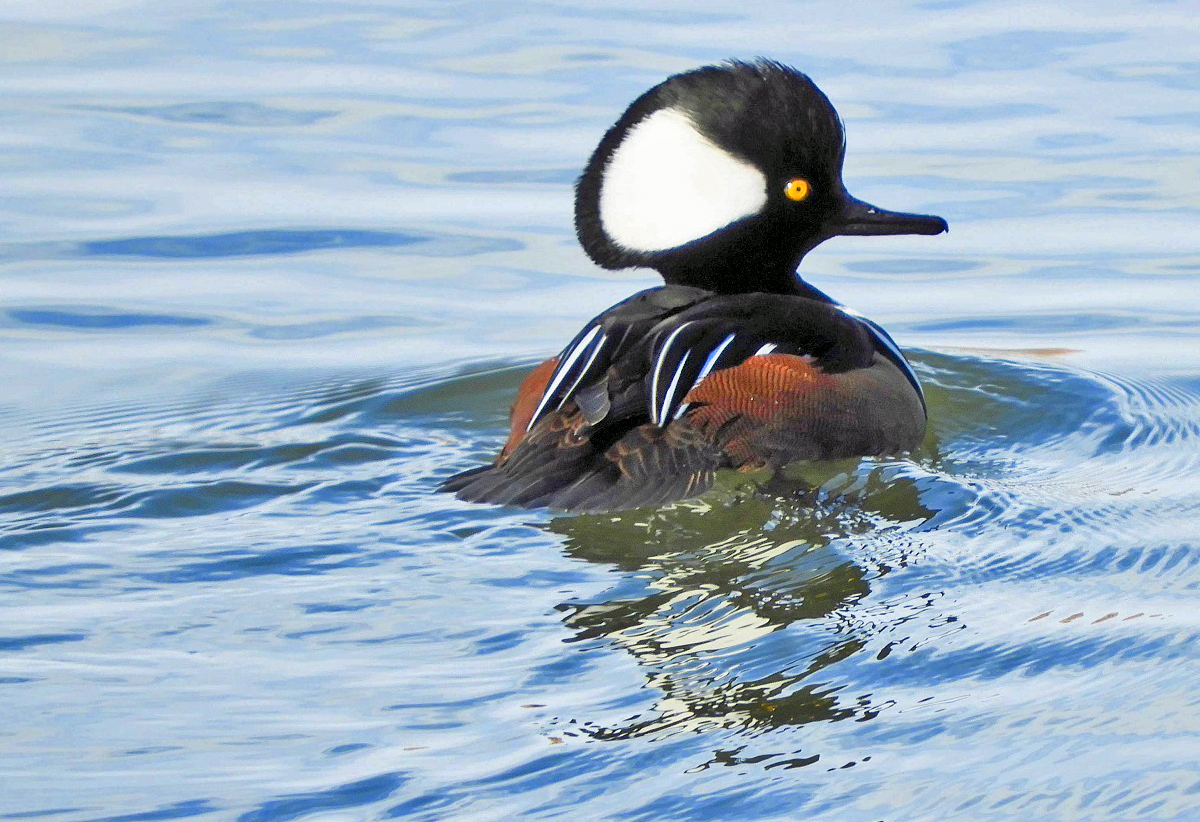
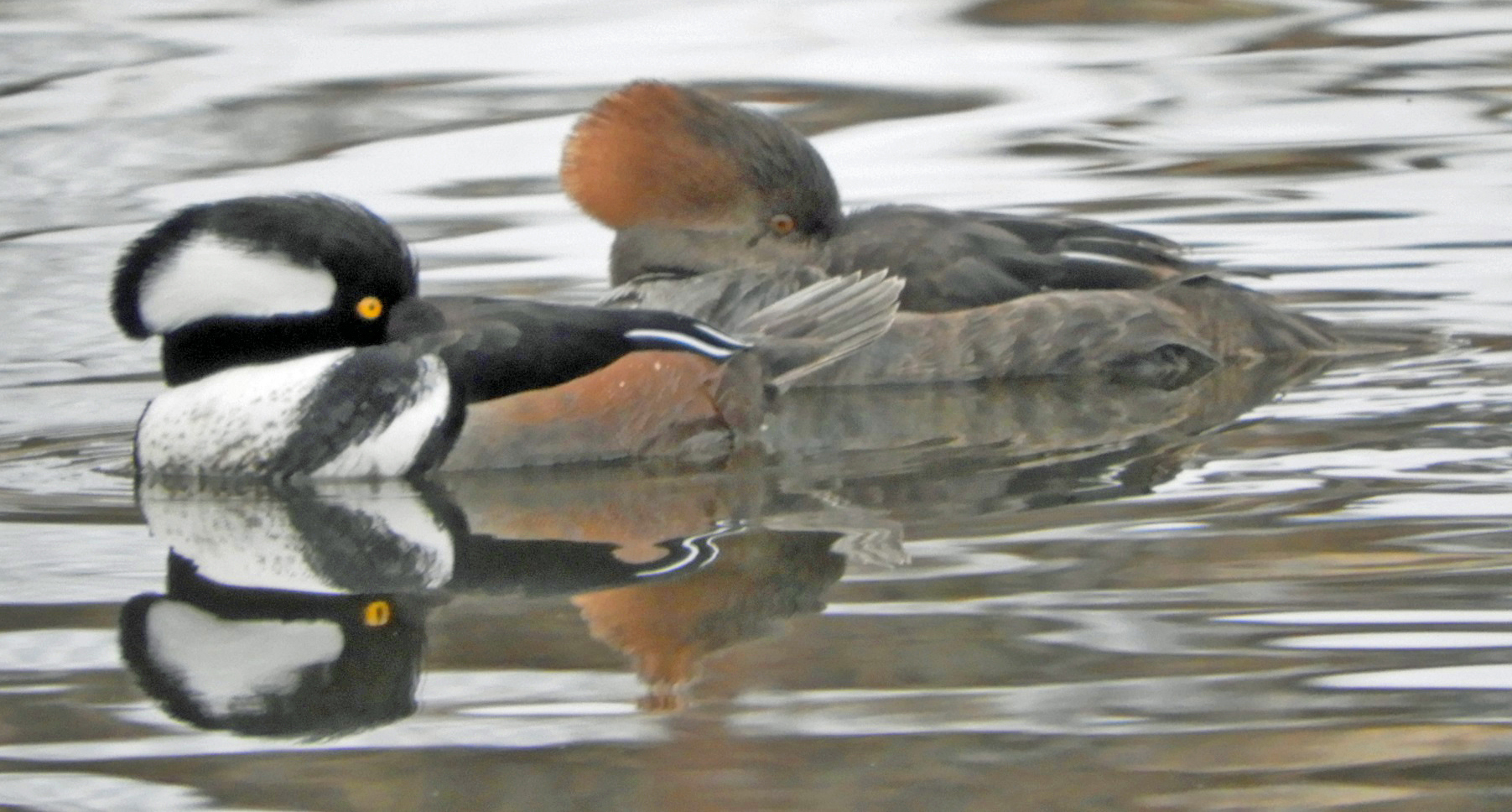
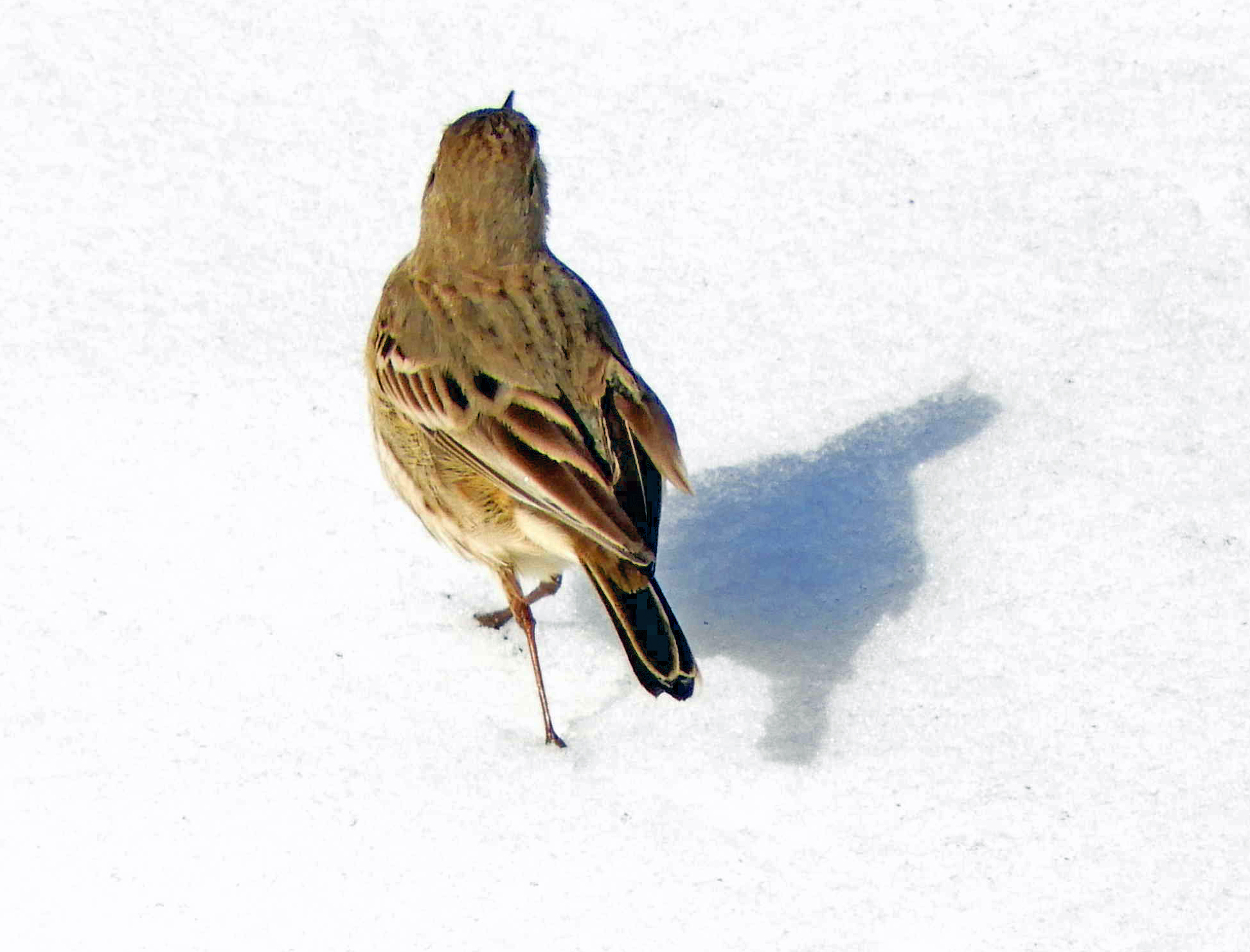
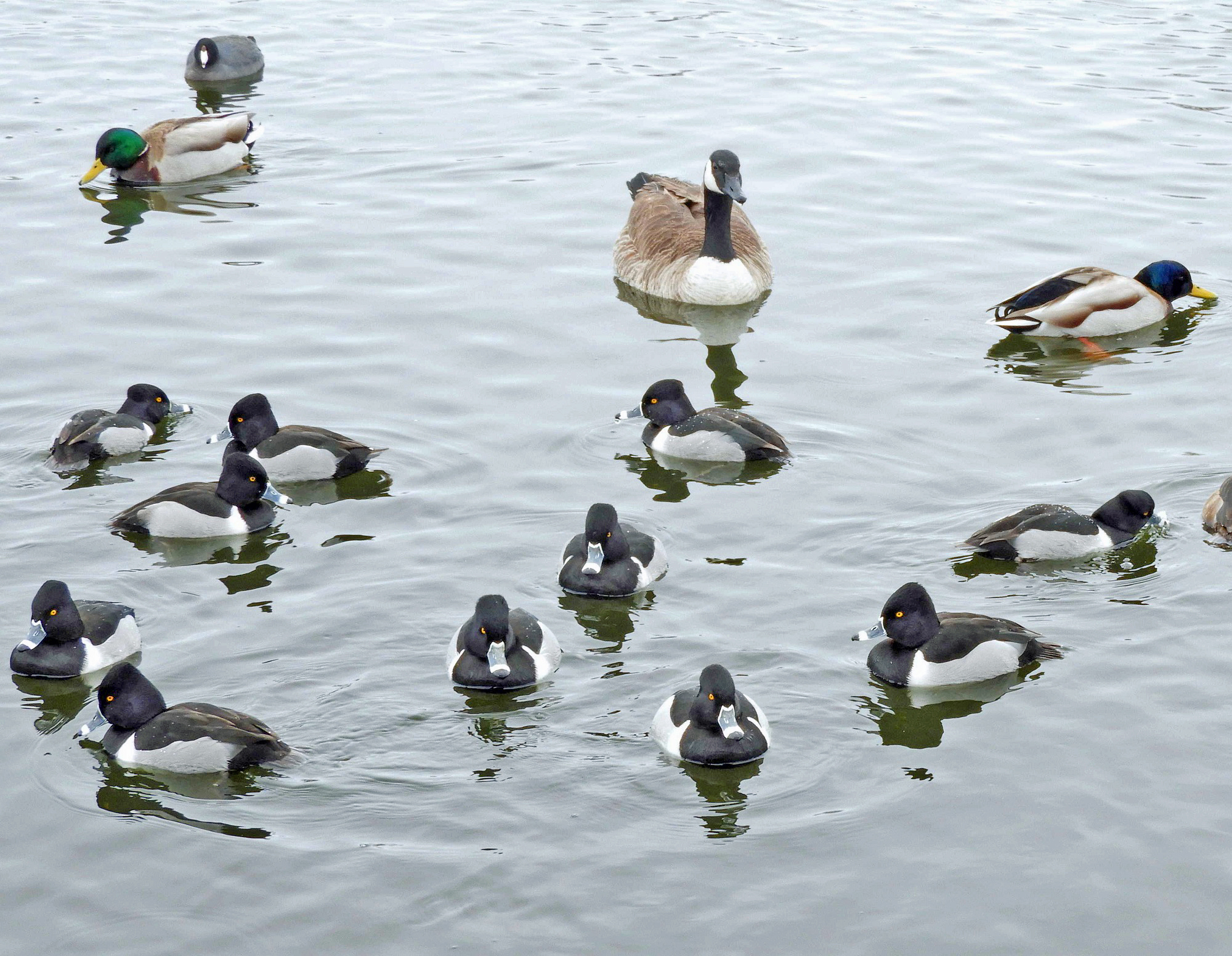
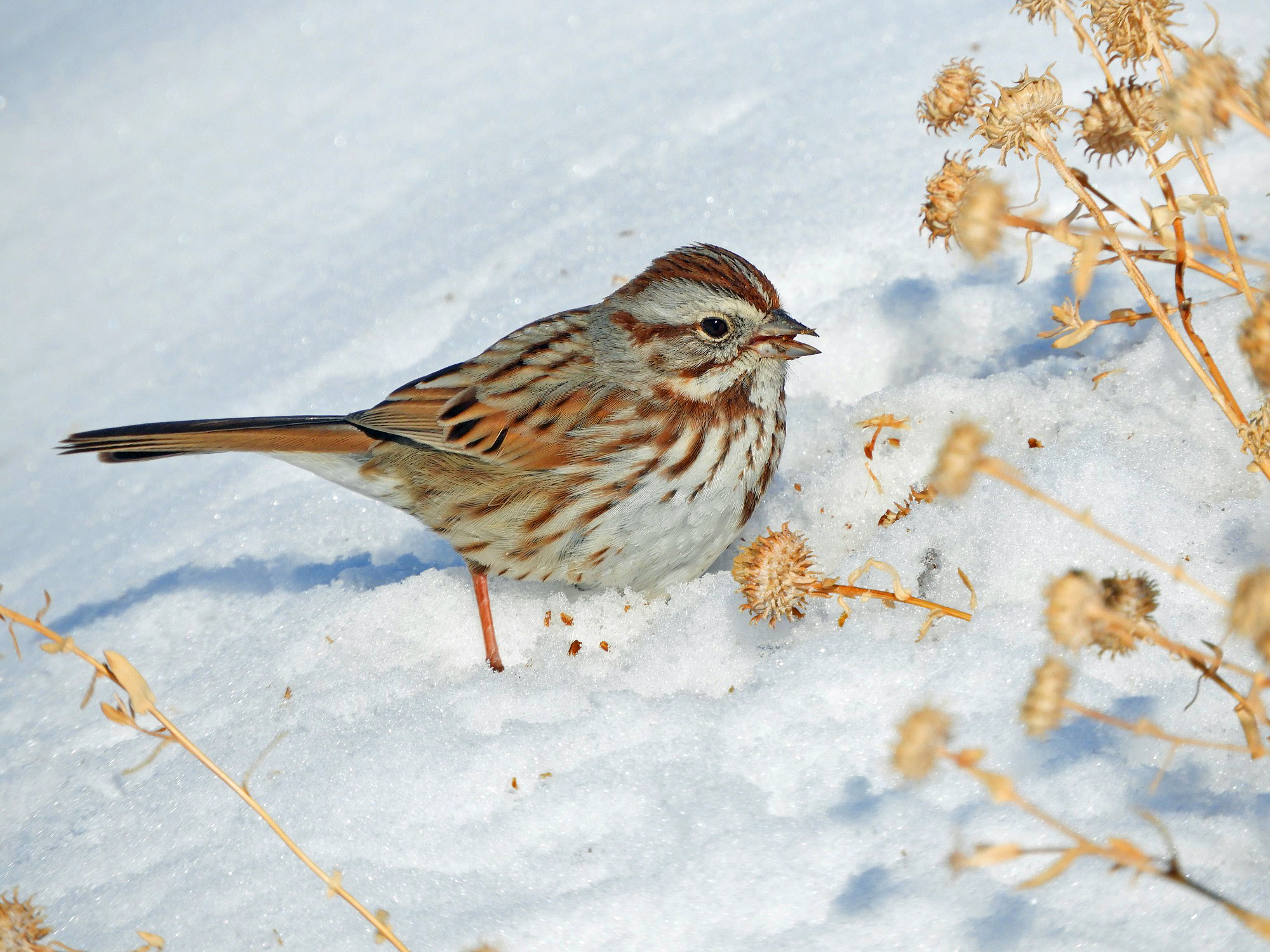
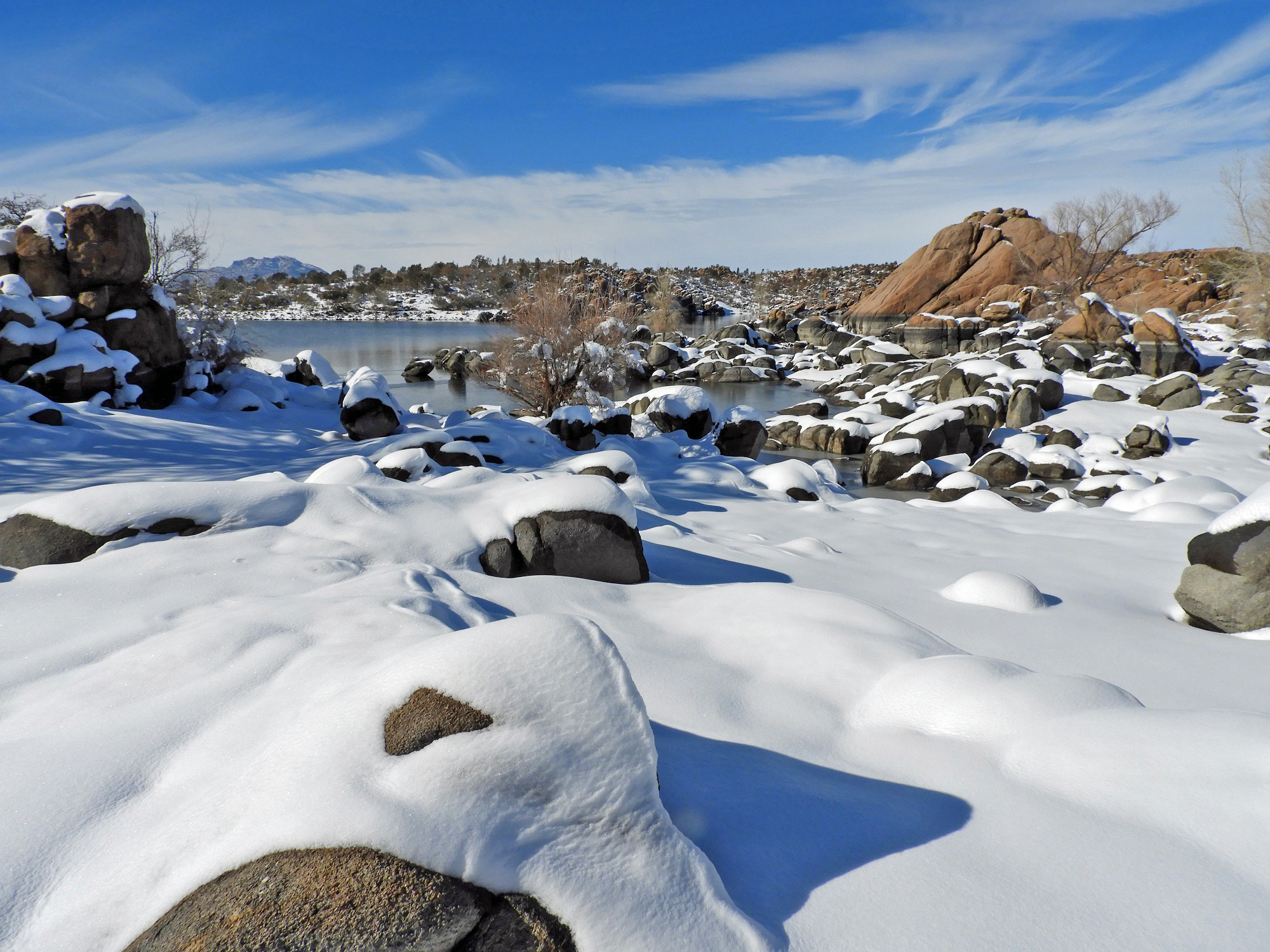
In the next issue, please stay tuned for a summary of the Lakes IBA surveys undertaken in December 2020 – March 2021. These surveys track the waterbirds and raptors at the Watson & Willow Lakes Ecosystem IBA. Many of the waterbirds are already on their way north after wintering at our lakes and others are raising families here. As a farewell to winter, please enjoy this gallery of photos by Richard Balland, taken at Watson Lake right after the big snowstorm in late January.
Michael Byrd: Released Kestrel Leaving the Hutch
Laura Rhoden: Upper Verde Photos
Wendy Wonderley: Watson Woods IBA Photos except Gadwall
Richard Balland: Gadwall; Watson Lake Photos; Northern Shoveler; Wilson’s Snipe; Hooded Merganser; American Pipit; American Coot, Mallard, Canada Goose, Ring-necked Duck; Song Sparrow